

Discover Peptide Mesotherapy for Hair, its potential benefits for scalp health, how the treatment works, and how it differs from Platelet Mesotherapy.
Hair restoration is not only about the follicles. The condition of the scalp also matters.
Peptide Mesotherapy takes a skin-focused approach to hair care by delivering a targeted formulation into the scalp. Depending on the formulation and treatment protocol, peptides may support aspects of skin hydration, elasticity, and overall skin quality.
This approach introduces a broader perspective on hair care: treating the scalp as skin that deserves the same attention as the face.
Often described through the concept of a “scalp facial,” this approach places scalp health within a more comprehensive hair restoration strategy.
At Clinique de Paris, understanding the relationship between the scalp, hair follicles, and individual hair concerns is an important part of determining which treatments may be appropriate for each patient.
What Is Peptide Mesotherapy for Hair?
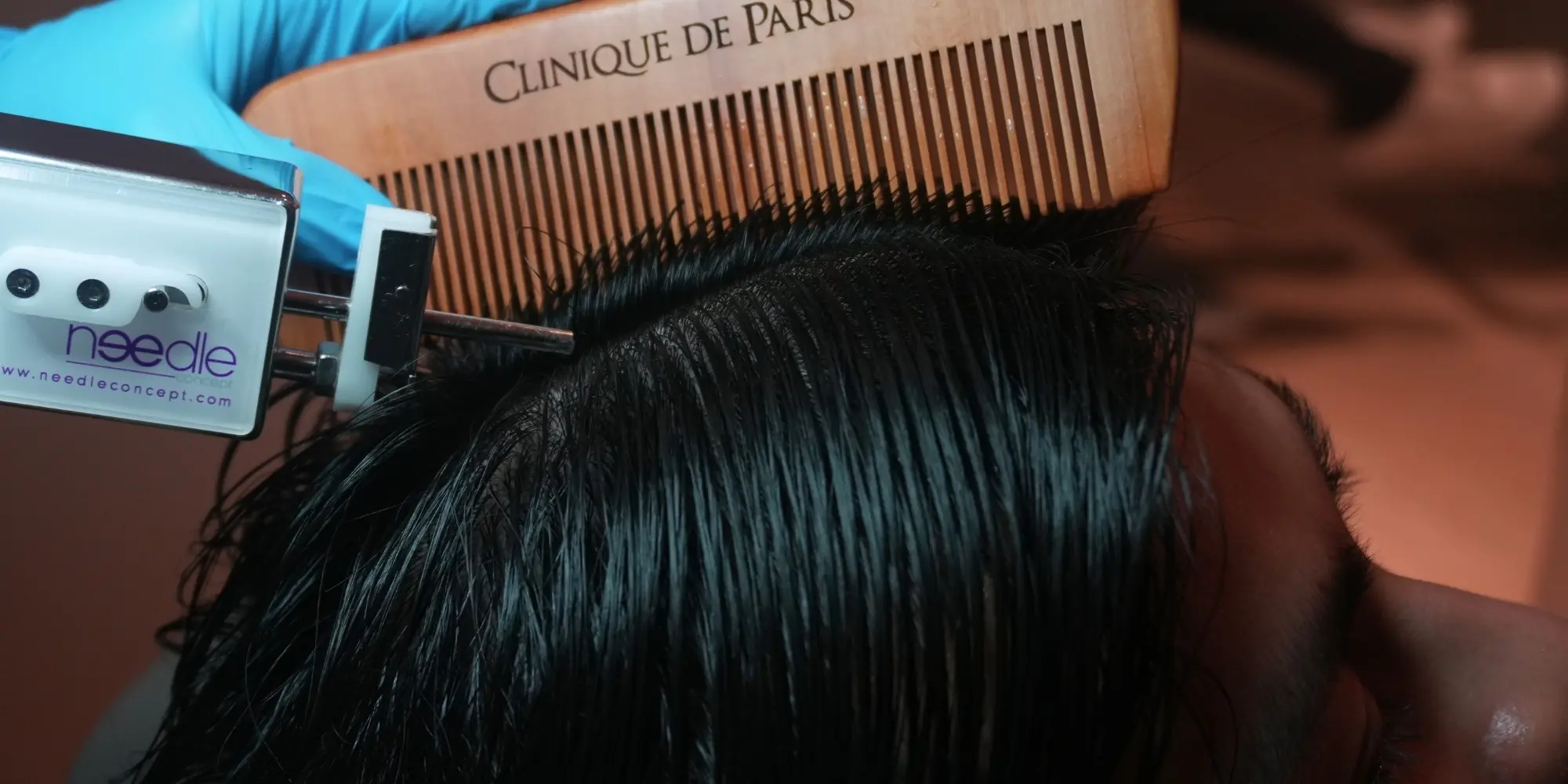
Peptide Mesotherapy is a minimally invasive scalp treatment that places a peptide-based formula into the skin with controlled injections. People may also search for it as Scalp Mesotherapy or Peptide Therapy for hair loss.
Peptides are short chains of amino acids. They can affect cell signals and skin function. In aesthetic medicine, peptide formulas are studied for skin quality, including hydration, bounce, and the extracellular matrix.
For the scalp, the aim is not just to feed the hair.
It is to support the scalp around the follicles as part of a broader hair restoration plan.
That difference matters. Hair loss can have many causes, so Mesotherapy should not be sold as a fix for every type of hair loss. A proper check is still important before deciding whether it has a role in a person’s treatment plan.
How Is Peptide Mesotherapy Performed?
The treatment involves placing the chosen formula into the scalp with multiple controlled injections.
A typical session targets the areas found during consultation, and the exact plan depends on scalp condition and treatment goals.
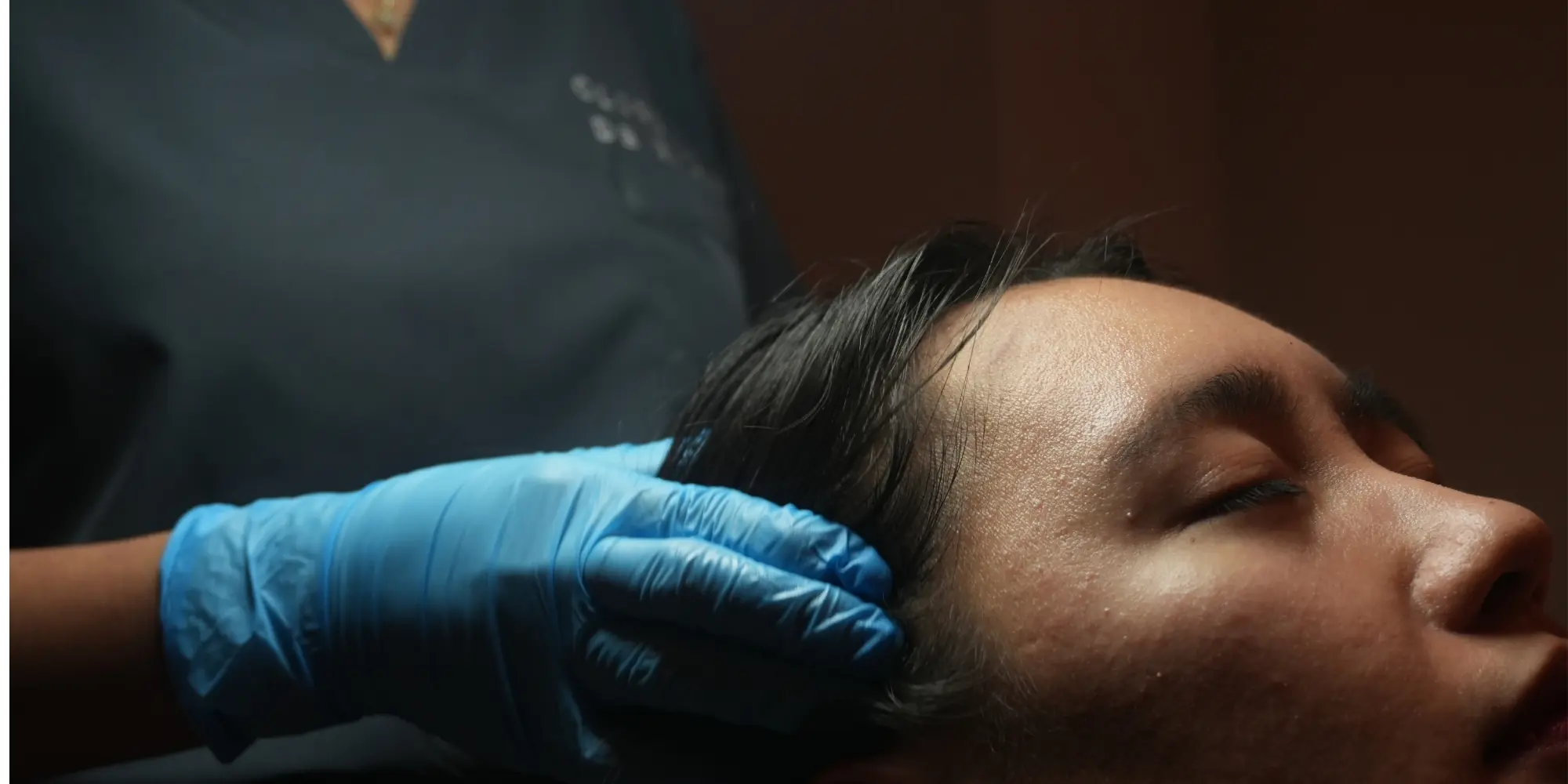
Because Mesotherapy is minimally invasive, temporary redness, tenderness, swelling, or small injection marks may occur.
Treatment should be done by a properly qualified medical professional using a clinically suitable formula and technique. A 2026 international consensus statement on Mesotherapy calls for standard practice, safe use, and evidence-based protocols.
What Are the Potential Benefits of Peptide Mesotherapy?
The potential benefits of Peptide Mesotherapy depend on the specific peptide formulation, the delivery technique, and the patient’s individual condition.
Peptide-based treatments are being studied for their potential contribution to skin quality and function.
In the context of scalp care, the treatment may be considered for the following objectives:
Supporting Scalp Skin Quality
Certain peptides are studied for their involvement in biological processes associated with skin quality. Their intended application in scalp treatments is to support the condition of the skin surrounding the follicles.
Supporting Skin Hydration
Some peptide-based formulations are developed alongside other ingredients intended to support skin hydration and moisture balance.
Supporting Skin Elasticity
Certain peptides have been investigated for their potential involvement in processes associated with skin structure and elasticity.
Supporting a Comprehensive Scalp Care Approach
Peptide Mesotherapy introduces a targeted approach to scalp care that may be considered alongside other treatments, depending on the patient’s assessment.
These potential benefits should not be interpreted as proven outcomes for hair regrowth. Clinical evidence varies across formulations, and further research is needed to establish the effectiveness of specific peptide treatments for scalp health and hair loss.
Why Does Scalp Health Matter in Hair Restoration?

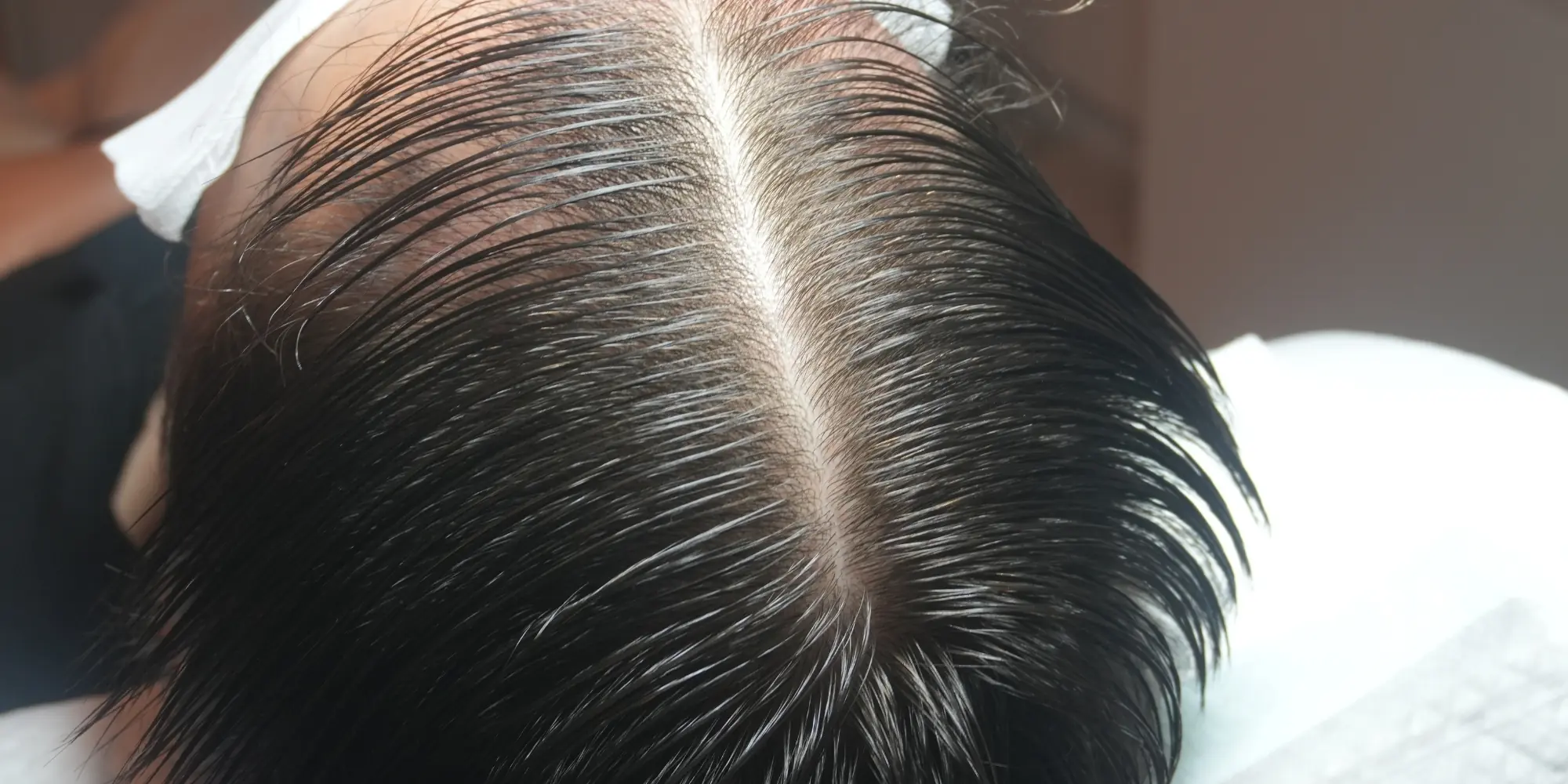
The scalp is the skin that surrounds and supports the hair follicles. Its condition is therefore an important consideration in a comprehensive approach to hair restoration.
Factors such as inflammation, dryness, excess oil, and changes in the skin barrier may affect scalp condition.
However, maintaining a healthy scalp does not necessarily prevent or reverse hair loss.
Conditions such as androgenetic alopecia, commonly known as pattern hair loss, involve changes in the hair follicles themselves. These conditions may require treatments that directly address the underlying biological processes.
This distinction is important when considering scalp treatments.
A treatment intended to support skin quality should not be confused with a treatment designed to address the specific causes of hair thinning or hair loss.
Understanding both the scalp and the follicles allows medical professionals to determine which approaches may be appropriate for an individual’s hair restoration plan.
The “Scalp Facial”: Treating the Scalp Like Skin
A scalp facial is a skin-focused approach to scalp care that applies the principles of facial skin treatments to the scalp.
The concept recognizes that the scalp is living skin and deserves targeted care, particularly because it provides the environment in which hair follicles function.
Just as facial treatments may focus on hydration, skin quality, and overall skin condition, scalp-focused treatments aim to address the condition of the skin on the head.
Peptide Mesotherapy may be considered within this approach because it delivers a selected formulation directly into the scalp.
However, a scalp facial is a descriptive treatment concept rather than a standardized medical procedure. The actual treatment and its potential effects depend on the techniques and products used.
It is also important to understand that treating the scalp does not directly renew facial skin. Each area requires its own assessment and appropriate treatment protocol.
Is Peptide Mesotherapy the Same as Platelet Mesotherapy (PMT)?
No. Peptide Mesotherapy and Platelet Mesotherapy (PMT) are different treatments that use different preparations.
Although both may be discussed in the context of supportive scalp care and hair restoration, their ingredients and intended mechanisms differ.
| Peptide Mesotherapy | Platelet Mesotherapy (PMT) |
| Uses a formulated preparation containing selected peptides and potentially other ingredients. | Uses a preparation derived from the patient’s own blood, containing platelet-related components. |
| Its intended effects depend on the selected peptide formulation. | Its intended effects are associated with the biological components of platelet preparation. |
| Formulation and delivery protocols vary. | Preparation and administration protocols vary. |
Neither treatment should automatically be considered a substitute for medical hair loss treatments.
The appropriate option depends on the patient’s condition, treatment objectives, and medical assessment.
Next: Platelet Mesotherapy: A Well-known Science, Innovative Application for Hair Loss
Who May Consider Peptide Mesotherapy?
Peptide Mesotherapy may be considered by individuals interested in a targeted scalp treatment as part of a broader skin or hair care plan.
However, suitability depends on several individual factors.
A medical consultation should consider:
- The cause and pattern of hair loss
- Existing scalp conditions
- Current medications and medical treatments
- Previous hair restoration procedures
- Individual treatment objectives
- The ingredients and suitability of the proposed formulation
People experiencing persistent or progressive hair loss should undergo an appropriate assessment before pursuing supportive scalp treatments.
The important question is not simply whether someone can undergo Peptide Mesotherapy, but whether the procedure is clinically appropriate for their specific concerns.
Peptide Mesotherapy as Part of a Comprehensive Hair Restoration Strategy

Hair restoration is rarely about addressing just one aspect of hair health.
Some individuals may need medical treatment to manage progressive hair loss. Others may be exploring ways to support scalp condition, maintain existing hair, or complement a broader restorative approach.
Peptide Mesotherapy may have a supportive role in selected treatment plans, depending on the formulation and available clinical evidence.
It is important to understand that scalp-focused treatments and hair restoration procedures serve different purposes. The right approach begins with identifying the underlying concern and establishing realistic treatment objectives.
At Clinique de Paris, our approach to hair restoration considers the individual’s scalp condition, hair concerns, and medical history before determining which treatment options may be appropriate.
A More Complete Approach to Scalp and Hair Health

Healthy hair involves more than the visible hair shaft. The scalp provides the environment in which hair follicles function, making its condition an important consideration in comprehensive hair care.
Peptide Mesotherapy introduces a targeted, skin-focused approach to scalp treatment, while the concept of a scalp facial encourages a broader understanding of the relationship between skin and hair health.
However, the effectiveness and suitability of any treatment depend on its formulation, clinical application, and the individual’s condition.
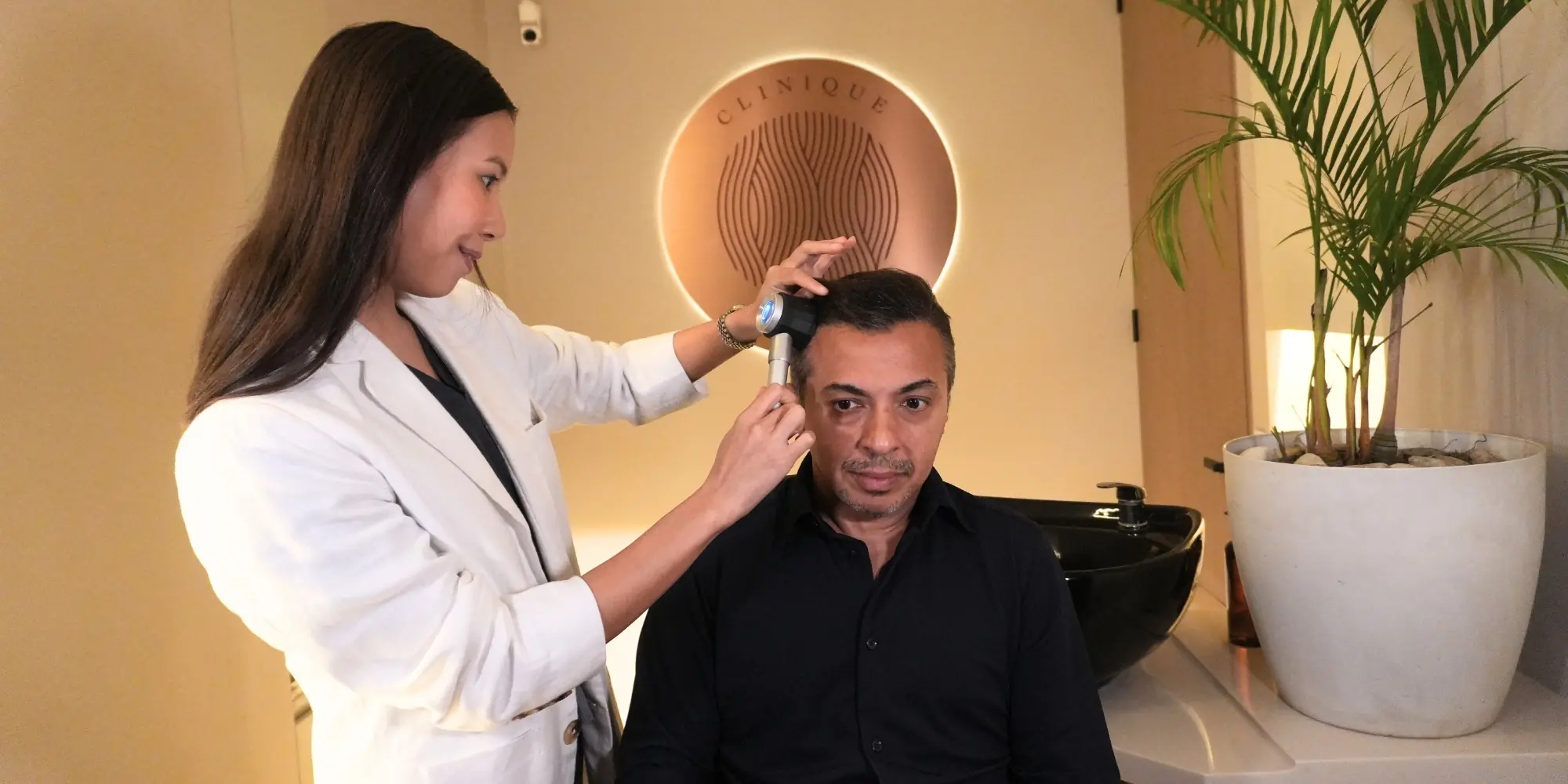
At Clinique de Paris, our doctors can assess your scalp and hair concerns and discuss appropriate treatment options based on your individual restoration goals.
For booking and inquiries, call +63 917 676 5090 or visit cliniquedeparis.com.

FAQs
What is Peptide Mesotherapy for Hair
Peptide Mesotherapy is a minimally invasive scalp treatment that delivers a formulated preparation containing selected peptides into the skin through controlled injections. It is intended to support aspects of scalp skin quality as part of a broader hair care or restoration plan.
Does Peptide Mesotherapy help regrow hair?
Peptide Mesotherapy should not be presented as a proven standalone hair regrowth treatment. Research into peptides has explored their potential effects on skin function, but evidence for specific peptide formulations in hair restoration remains limited. Its suitability depends on the formulation and the individual’s condition.
What are the benefits of Peptide Mesotherapy?Potential treatment objectives may include supporting scalp skin quality, hydration, and aspects of skin function. However, results vary depending on the formulation, delivery method, and individual factors.
What is a scalp facial?
A scalp facial is a skin-focused approach to scalp care that applies concepts commonly associated with facial treatments, such as hydration and skin quality, to the scalp. It is a descriptive treatment concept rather than a standardized medical procedure.
Can a scalp facial improve facial skin?
A scalp-only treatment should not be expected to directly improve facial skin. The scalp and face are separate treatment areas, and each requires its own appropriate assessment and protocol.
How often should Peptide Mesotherapy be performed?
There is no universal treatment schedule for Peptide Mesotherapy. The recommended frequency depends on the specific formulation, treatment protocol, scalp condition, and medical assessment.
Is Peptide Mesotherapy the same as PMT?
No. Peptide Mesotherapy uses a formulated preparation containing selected peptides, while Platelet Mesotherapy (PMT) uses components derived from the patient’s own blood. They involve different preparations and treatment protocols.
Is Peptide Mesotherapy suitable for everyone experiencing hair loss?
No. Suitability depends on the cause of hair loss, scalp condition, medical history, and treatment objectives. A medical assessment is necessary to determine whether the procedure has an appropriate role in an individual’s treatment plan.
