

Clinique De Paris

Last updated:
Ellipse 2
3
min read

Asian Hair Restoration for Women: Understanding DHI Hair Transplants

News

/

Asian Hair Restoration for Women: Understanding DHI Hair Transplants

Table of contents:

What Is Asian Hair Restoration for Women?

Causes of Female Hair Loss and When to Consider Treatment

How Doctors Assess Female Hair Loss: Ludwig Scale and Trichoscopy

Asian Female Hairline Design: Anatomy, Density and Natural Results

Understanding Hairline Differences Across Ethnicities

Is DHI Suitable for Female Hair Transplants?

Female Hair Transplant Recovery: Timeline and Travel Planning

Begin Your Hair Restoration Journey at Clinique de Paris

FAQs

Share this article:

Asian hair restoration for women requires careful hairline design and medical assessment. Learn about female hair loss, DHI, and natural-looking results.

Asian hair restoration in women requires careful consideration of facial anatomy, natural hair characteristics, donor hair availability, and individual aesthetic goals. Unlike a standard hair transplant approach, female hair restoration often involves preserving existing hair while restoring density or refining the hairline.

Direct Hair Implantation (DHI) is one technique that may be considered for selected female patients, particularly when precise placement around existing hair is important. However, treatment suitability depends on the underlying cause of hair loss, donor hair quality, and an individual medical assessment.

Understanding these factors is essential when planning a natural-looking female hairline and determining whether hair transplantation is the appropriate treatment.

What Is Asian Hair Restoration for Women?

Asian hair restoration for women is a specialized approach to treating female hair loss while considering facial proportions, forehead shape, hair characteristics, and natural hairline patterns. Treatment may involve restoring a receding hairline, improving hair density, or addressing localized thinning.

The appropriate approach depends on the cause of hair loss, the availability of healthy donor hair, and the patient’s individual goals. Depending on the diagnosis, treatment may involve medical management or surgical hair restoration techniques such as Direct Hair Implantation (DHI).

Causes of Female Hair Loss and When to Consider Treatment

Female hair loss often has many causes, so finding the cause comes first.

Common causes include family risk, hormone shifts linked to menopause or PCOS, thyroid disease, and physical or mental stress. Low iron, zinc, vitamin D, and low protein can also lead to shedding in women who are at risk.

Female pattern hair loss often gets worse over time. Telogen effluvium can cause a faster, more even shed.

Not every woman with thinning hair needs a hair transplant. A clear diagnosis shows whether medicine, nutrition changes, or surgery is the right step.

If you are planning hair restoration around a holiday or a key life event, an early visit helps. It gives time to find the cause, review options, and set fair hopes for healing and results.

How Doctors Assess Female Hair Loss: Ludwig Scale and Trichoscopy

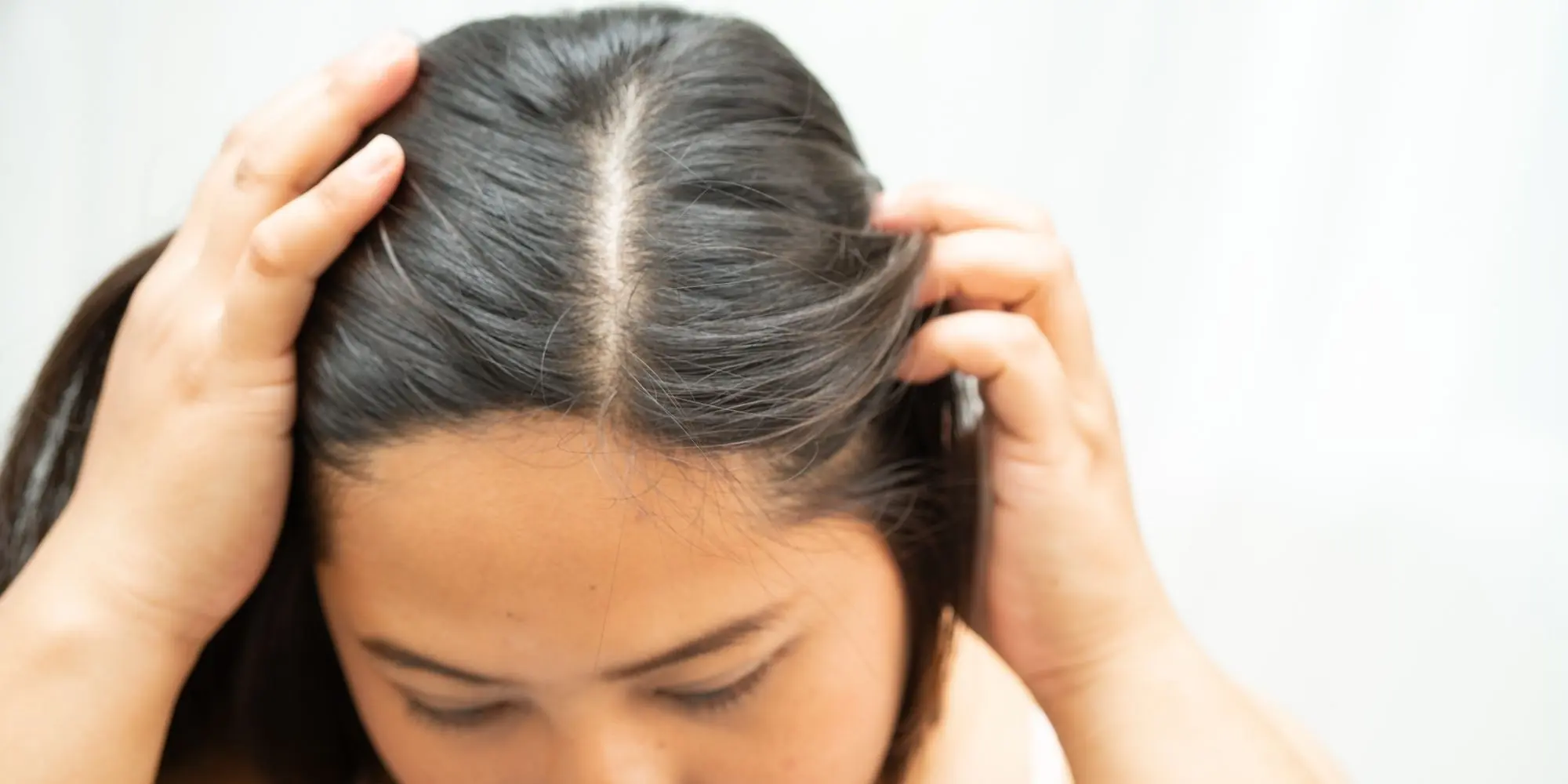
The Ludwig scale is used to assess female pattern hair loss.

  • Grade I: Mild thinning at the crown, with most of the front hairline kept.
  • Grade II: Clear loss of density and a wider center part.
  • Grade III: Strong thinning with visible scalp in the area.

Trichoscopy is a close scalp exam that uses zoom. It gives more detail. Findings can include variation in hair shaft width, follicles getting smaller, more fine vellus-like hairs, and more single-hair follicle groups.

These checks help show how much hair is lost and where it is lost. They also support tailored treatment planning.

For women considering surgery, the exam should also check donor hair. The amount, quality, spread, and supply of donor hair must be reviewed to see if surgery is a good fit and how grafts can be used well.

This matters even more for women, because keeping the hair you have while adding density needs careful planning.

Asian Female Hairline Design: Anatomy, Density and Natural Results

In Asian hair restoration, hairline design often aims for soft, round lines that fit the face.

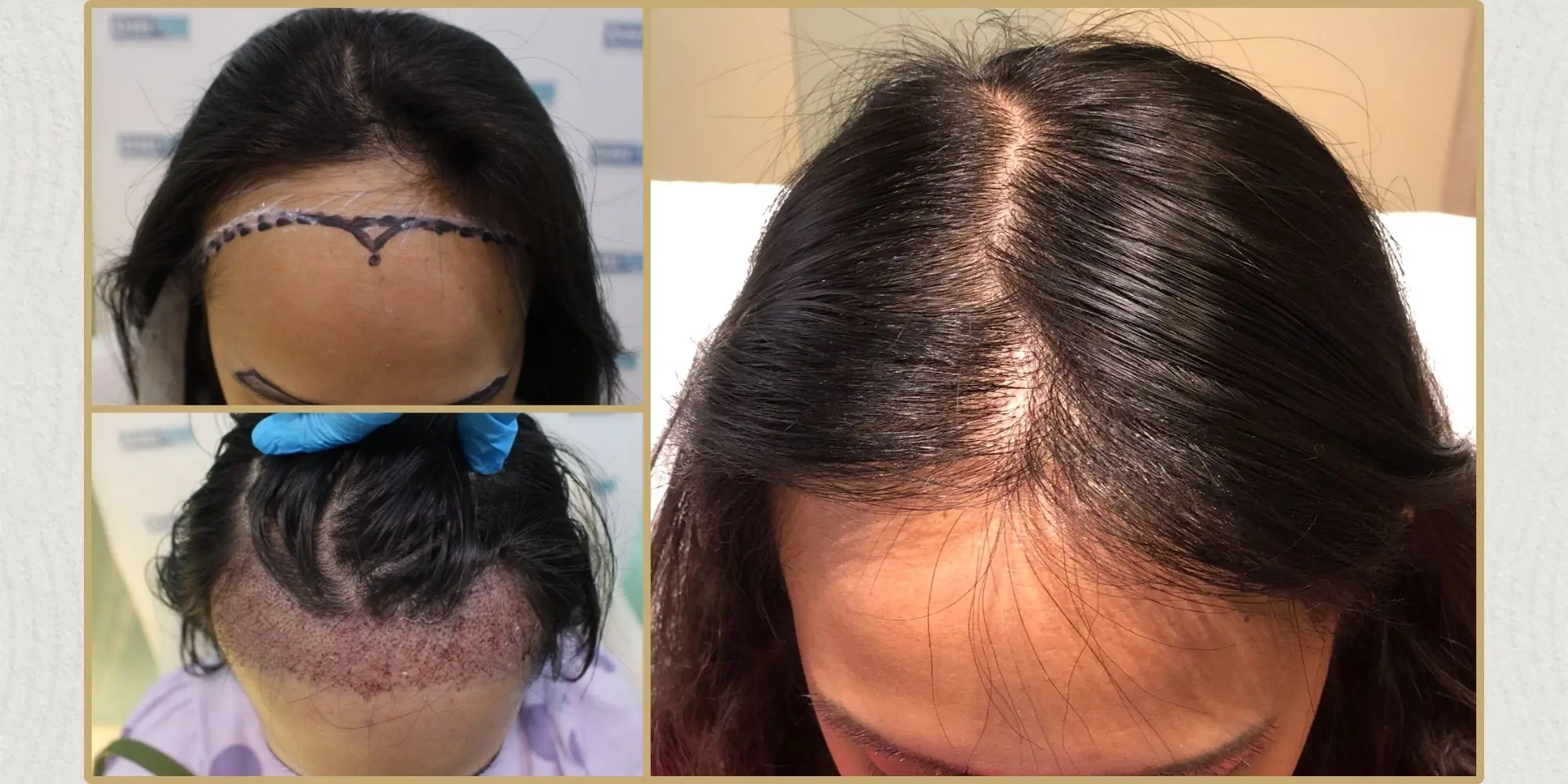
For an Asian hair transplant, the goal is a natural line that suits the patient’s features. The central hairline, or trichion, may have a gentle heart shape, based on the patient’s natural features and wishes.

Forehead shape, facial balance, receding temples, and the frontalis muscle also matter. These anatomic landmarks help avoid a hairline that is too low or looks fake.

Density is also important. Instead of just adding more grafts, the goal is a natural spread of hair that follows the direction, angle, and density of the existing follicles.

Asian women can have very different face shapes and hair traits. The ideal hair transplant design should be tailored, not based on ethnicity alone.

For women planning a hair transplant Manila trip, an early review can show whether the main goal is the front hairline, more density, less local thinning, or a mix of both. Many women compare hair restoration Philippines options when they need travel, recovery, and clinic care to fit one plan.

Understanding Hairline Differences Across Ethnicities

Hairline traits can vary a lot from person to person and across groups. Knowing these differences helps create a more natural result.

Some Caucasian women naturally have more temporal angulation, uneven frontal lines, and clear hairline patterns. Others may have an M-shaped front hairline or more temple recession.

When these areas are restored, the focus is on smooth change, the right follicle direction, and avoiding too much advance of the trichion.

The same ideas apply to Asian patients. Rather than using a fixed ethnic template, good hair restoration looks at facial balance, hair traits, and the patient’s goals.

In the end, the aim is not to create a new hairline. It is to restore one that fits the person.

Is DHI Suitable for Female Hair Transplants?

Direct Hair Implantation (DHI) can offer useful technical benefits for some female patients.

Unlike standard methods that make the channels first, DHI uses a special implant pen to place follicular units.

This gives close control over angle, direction, and depth. That can help when rebuilding delicate female hairlines or working around existing hair.

DHI may also allow placement between existing hairs and, in some cases, a non-shaven or partly shaven method. For women who want to keep their hairstyle, this may matter.

If you are looking at a DHI hair transplant Philippines option, the key is whether the method fits your scalp, hair traits, donor supply, and treatment goals. Current side-by-side evidence does not show that DHI always gives better graft survival or better results than skilled FUE.

The best method depends on medical review, the skill of the surgical team, and the needs of the case.
Next:
A Complete Guide to Female Hair Transplants and How DHI Makes No Shave Transplants Possible

Female Hair Transplant Recovery: Timeline and Travel Planning

For women traveling to Manila for hair restoration, the trip is more than booking the procedure. Recovery, follow-up, and personal plans all need thought.

A hair holiday lets patients plan treatment around time they can use for the first phase of healing.

Recovery and Discretion

Women may want different levels of privacy after treatment. Depending on the case, non-shaven or partly shaven DHI may be a more discreet option.

Even so, some short-term signs can still happen. Mild swelling, redness, and small scabs around the transplanted area may occur for a time.

Planning Around Holidays and Milestones

Patients may plan their procedure around annual leave, long holidays, or time between work duties. Those planning for weddings, parties, or other milestones should plan early.

It is also important to know that transplanted hair does not show full results right away. First growth often appears in three to six months. Better results usually show in nine to twelve months. Crown work may take longer.

Follow-Up and Ongoing Care

For local and overseas patients, ongoing care is a key part of planning. Follow-up should be set before travel, with remote visits when needed and in-person checks when needed.

At Clinique de Paris, patients can start with a consultation to talk about concerns, medical fit, treatment choices, and travel plans before they book.

A well-planned hair holiday is not about rushing a surgery into a short trip. It is about giving enough time for the right review, treatment, and healing.

Begin Your Hair Restoration Journey at Clinique de Paris

Considering Asian hair restoration or hair transplant Philippines options?

Whether you are planning a visit home, using holiday time, or getting ready for an important event, the first step is to learn what your hair needs.

At Clinique de Paris, our medical team provides tailored reviews to assess the cause of hair thinning, check donor hair fit, and choose the best treatment path.

From hairline design and density planning to discreet recovery, every plan is guided by the patient’s body shape, medical needs, and goals.

Your hair restoration journey deserves care and medical guidance.

Book your consultation now at +63 917 676 5090 or visit cliniquedeparis.com.

FAQs

Does every woman with thinning hair need a hair transplant?

No. Female hair loss can have many causes, including genes, hormone shifts, thyroid disease, stress, and low nutrients. A clear diagnosis matters because some women do better with medical care or nutrition changes rather than surgery.


Why are the Ludwig Scale and trichoscopy useful during assessment?

The Ludwig Scale helps sort female pattern hair loss by grade, while trichoscopy shows zoomed scalp signs like follicles getting smaller, hair shaft variation, and more fine vellus-like hairs. Together, these tools support more tailored treatment planning.


Is DHI always better than conventional FUE implantation?

Not always. DHI can give close control over angle, direction, and depth, and may allow non-shaven or partly shaven options in selected patients. But current evidence does not show that DHI always gives better graft survival or better results than skilled conventional FUE implantation.


How far in advance should patients plan hair restoration before a wedding, holiday, or major milestone?

Patients should plan well in advance because transplanted hair does not show full results right away. Initial growth usually shows in three to six months, with fuller results in nine to twelve months. Crown work may take longer.


Why is tailored hairline design important for Asian hair restoration?

Asian women can have very different face shapes and hair traits, so hairline design should not be based on ethnicity alone. A natural result considers face shape, forehead form, receding temples, the frontalis muscle, the direction of the existing hair, and the patient’s wishes.

Next: Everything You Need to Know About Hair Transplants: A Beginner’s Guide to DHI


Book a FREE consultation with Clinique de Paris to discover the best solution for your hair loss.

our solutions

Hair to skin confidence

LET’S GET STARTED

Stay on top of it

Edit Template