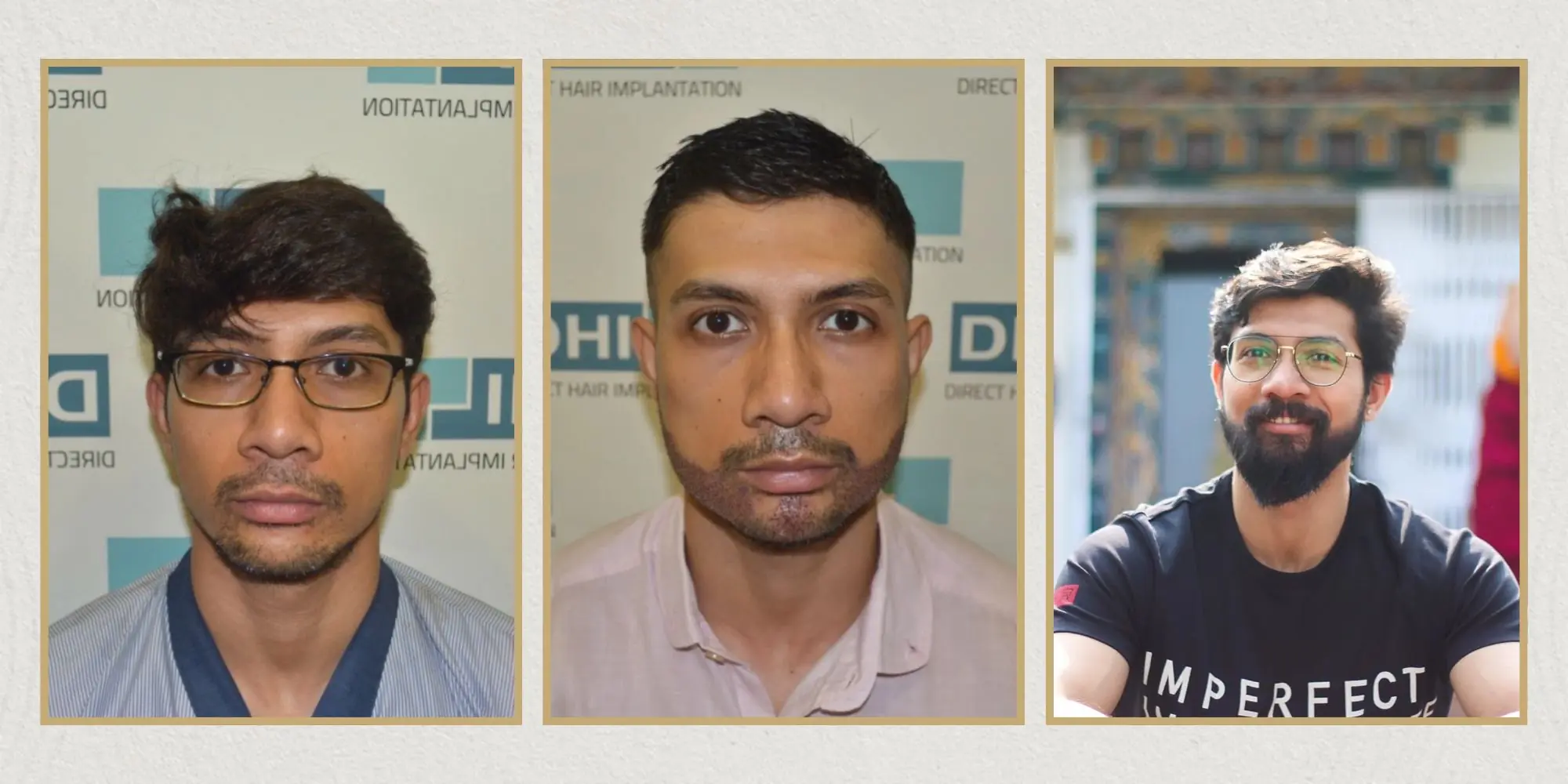


Explore Asian male hair restoration, natural hairline design, male pattern baldness and DHI hair transplant options at Clinique de Paris in the Philippines.
A receding hairline or thinning crown is often one of the first visible signs of aging in men. However, hair loss is not simply a cosmetic concern. It can affect confidence, appearance and self-image, sometimes beginning as early as the twenties.
Modern Asian hair restoration combines medical science with an understanding of facial anatomy to create natural, age-appropriate results.
At Clinique de Paris, successful hair restoration begins with understanding why hair loss occurs and designing a treatment tailored to each patient.
Understanding Male Hair Loss and Hair Transplant
The most common cause of hair loss in men is androgenetic alopecia, also known as male pattern baldness.
This hereditary condition occurs when genetically susceptible hair follicles react to dihydrotestosterone (DHT), a hormone derived from testosterone. Over time, DHT causes susceptible follicles to undergo miniaturization, producing progressively finer, shorter, and thinner hairs until some follicles stop producing visible hair.
Genetic susceptibility can be inherited from both maternal and paternal family lines. It is not determined exclusively by the mother’s side of the family.
Other factors can contribute to hair shedding or thinning, including:
- Physical or emotional stress
- Thyroid disorders
- Hormonal changes
- Iron, zinc, or vitamin D deficiencies
- Inadequate protein intake
- Certain medications and underlying medical conditions
Unlike hereditary male pattern baldness, some of these causes may be reversible when properly identified and managed. A medical assessment helps distinguish between progressive follicular miniaturization and other forms of hair loss before treatment is considered.
Grading Male Hair Loss: The Norwood Scale
The Hamilton-Norwood scale is a classification system used to assess the pattern and progression of male pattern baldness. It categorizes hair loss into seven primary stages, helping clinicians evaluate the extent of recession and thinning.
- Stages I-II: Minimal recession or early changes to the frontal hairline.
- Stages III-IV: More visible temple recession, sometimes with crown thinning.
- Stages V-VII: Progressive hair loss affecting the frontal, mid-scalp, and vertex areas.
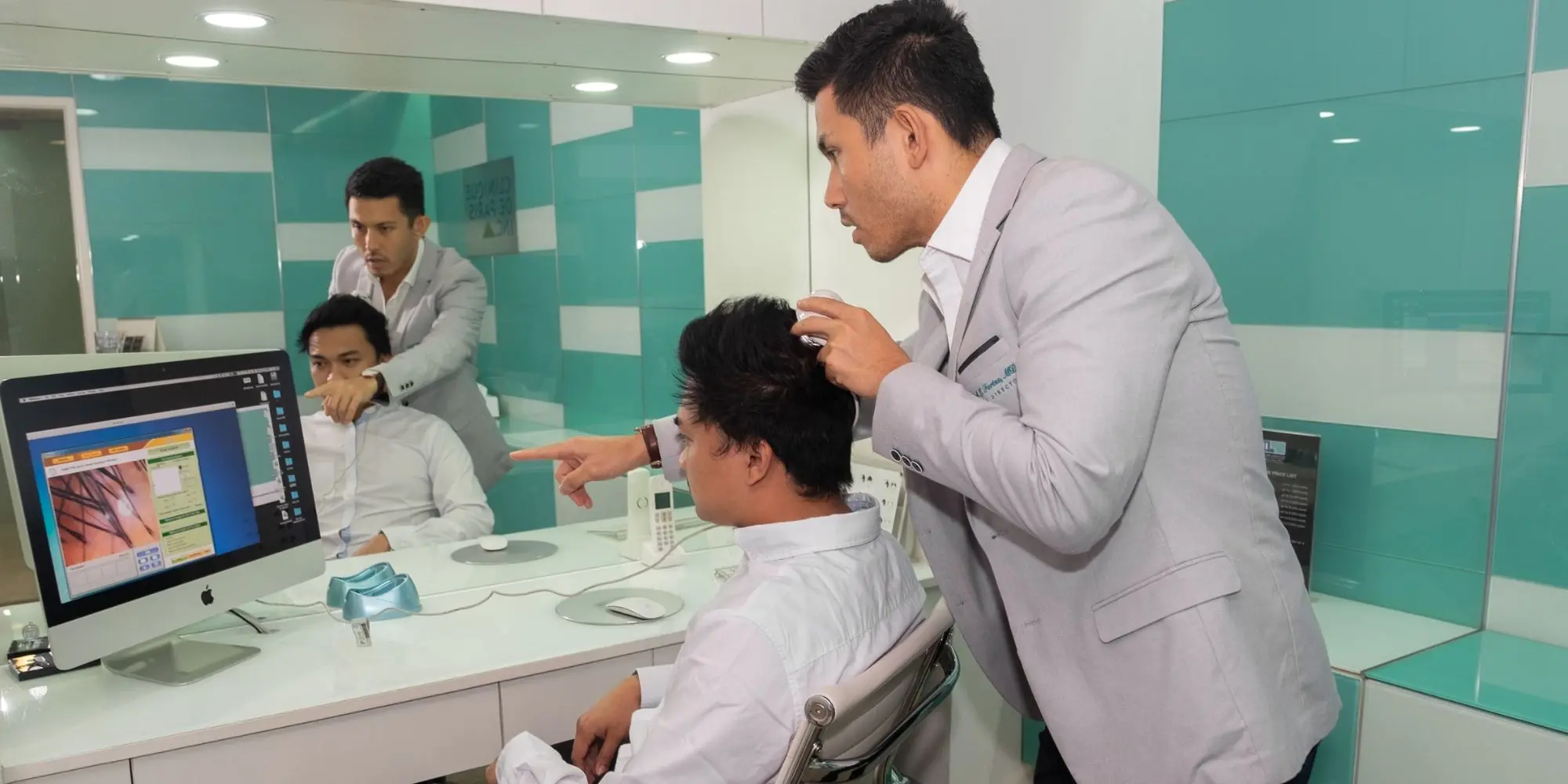
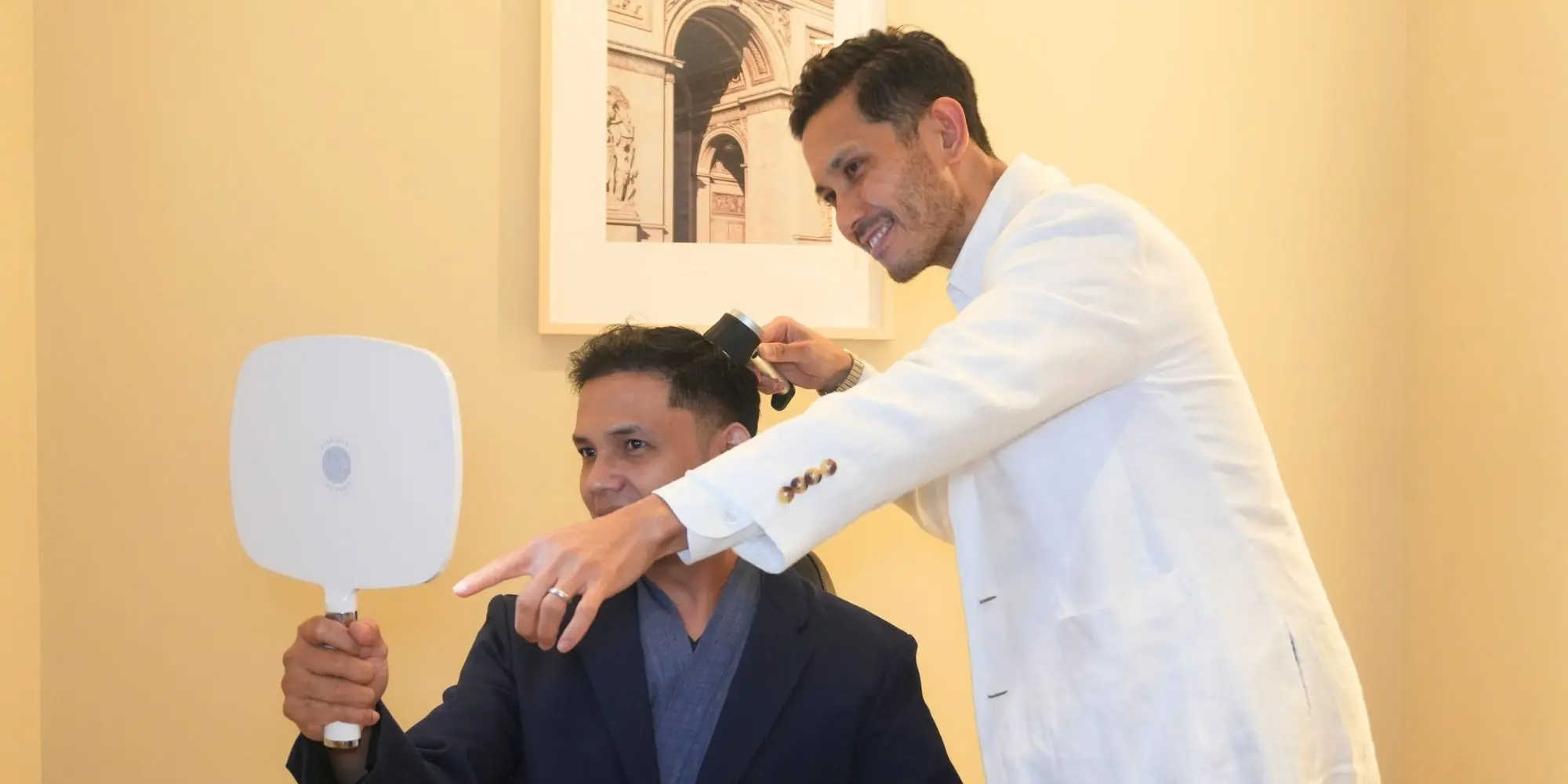
In addition to visual assessment, trichoscopy allows clinicians to examine the scalp and hair follicles at greater magnification. Findings such as variations in hair shaft diameter, follicular miniaturization, increased vellus-like hairs, and reduced hair density can help identify androgenetic alopecia.
Together, the Norwood scale and trichoscopy examination help assess hair loss progression, donor hair suitability, and whether a patient may be an appropriate candidate for hair transplantation.
Asian Hair Restoration: Designing the Male Hairline

Asian male hairlines often have a broader, lower, and less deeply recessed shape, though each person is different.
In Asian hair restoration, special attention is given to forehead height, temple angles, facial balance, and the direction of natural hair growth.
A successful hair transplant should avoid a hairline that is too straight or too low, since it may look artificial as the patient gets older.
Asian hair restoration may also include beard restoration, using selected follicular units to improve beard density, fill patchy areas, or sharpen facial hair definition.
Caucasian Male Hair Restoration: Facial Balance and Symmetry

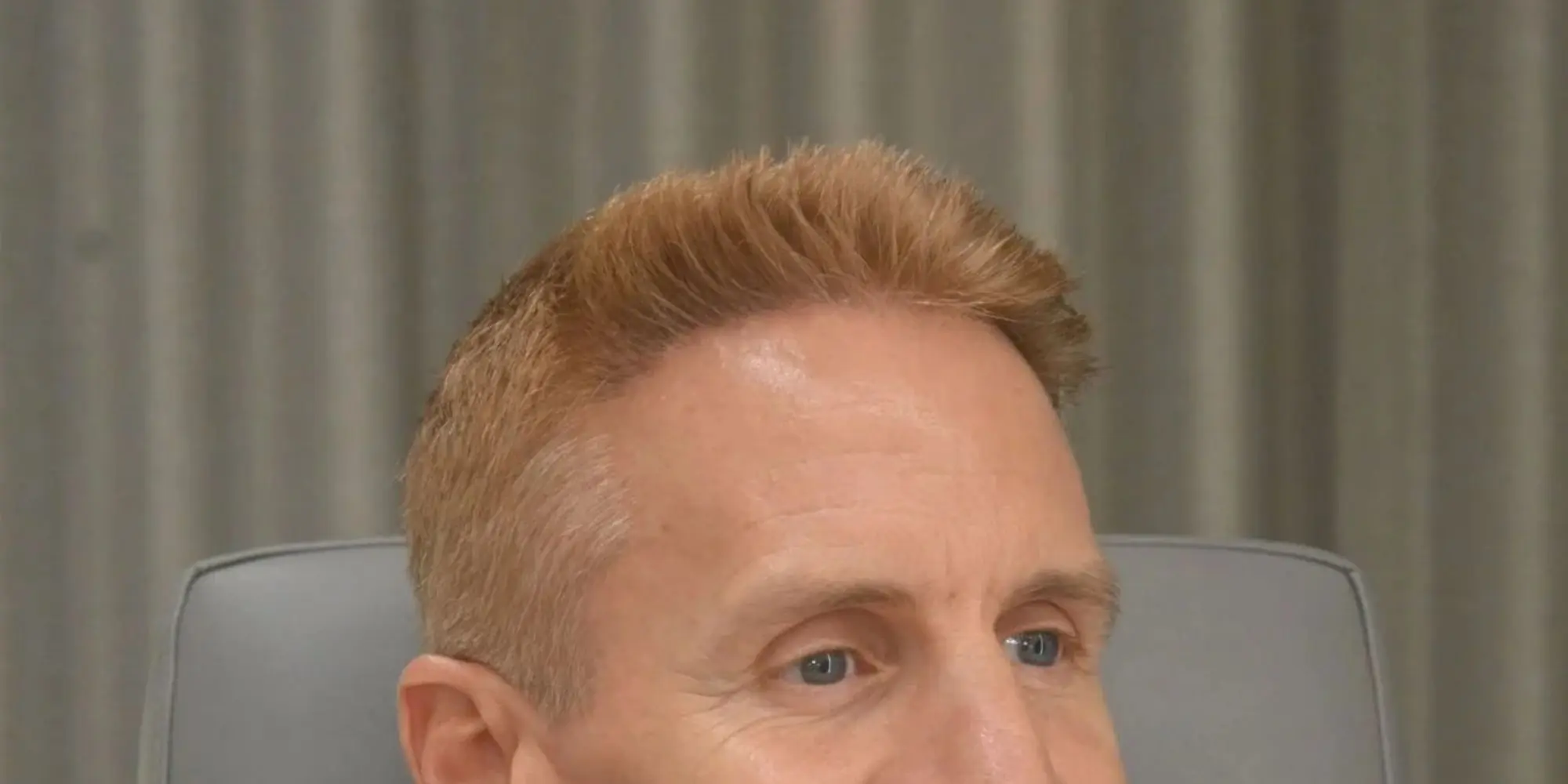
Caucasian male hairlines often show stronger temple recession and clear frontal contours. Differences in forehead curve and facial shape affect the ideal hairline position.
A rounded forehead may benefit from a more conservative frontal design, with carefully defined temple angles.
The goal is to achieve facial balance and symmetry while keeping natural, subtle unevenness. Hairline placement must also consider age, expected future hair loss, and the supply of donor follicles.
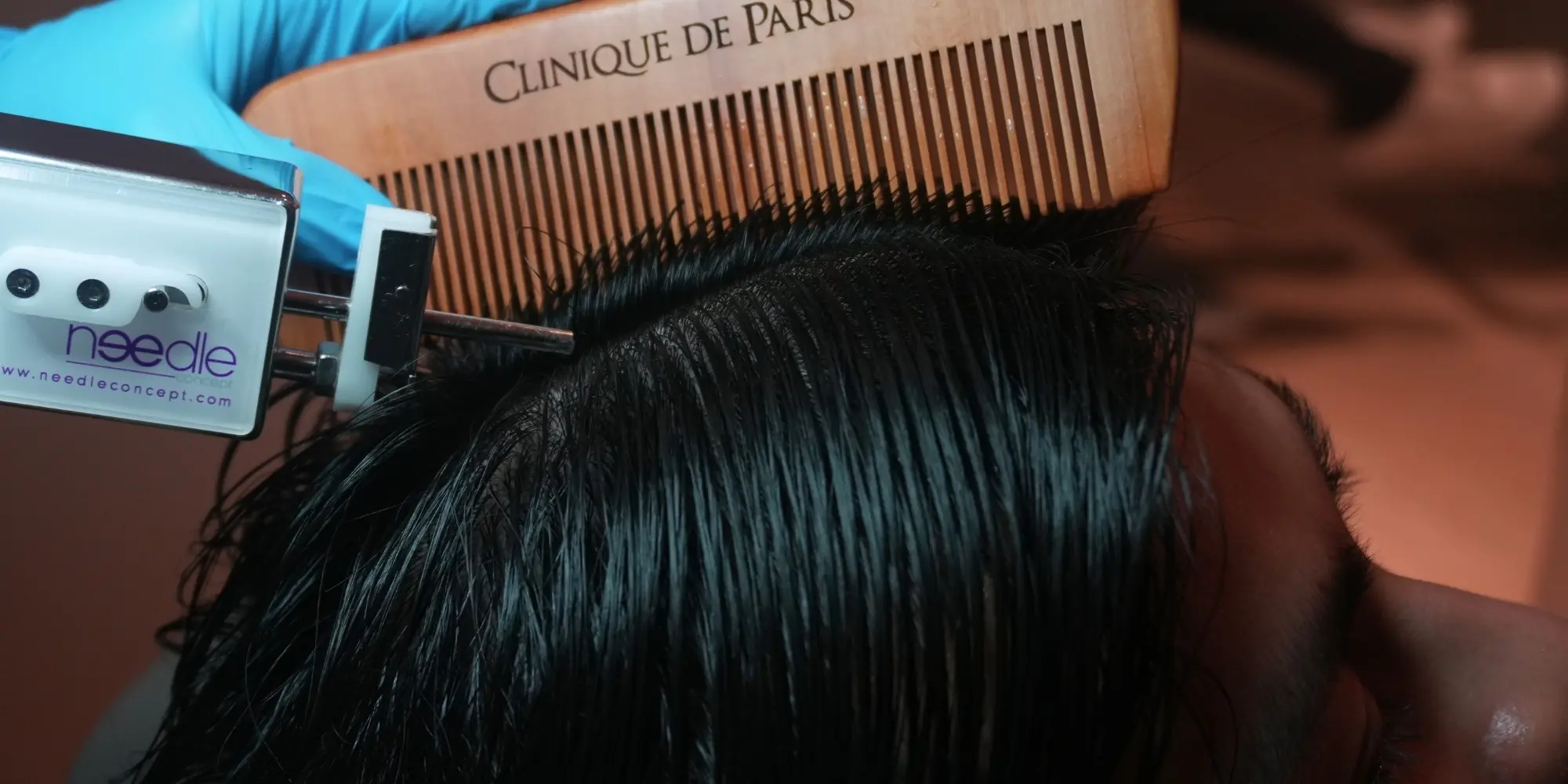
The Advantages of Direct Hair Transplant (DHI)
Direct Hair Transplant (DHI) is an advanced method that uses a special implanter pen to place individual follicular units.
Unlike standard FUE, which makes recipient channels first, DHI combines channel creation and graft placement into one step.
This offers several practical benefits, including precise control of implantation depth, angle, and direction. It is especially useful for frontal hairline work and crown restoration.
The technique may also help place grafts between existing hairs, while reducing needless handling of nearby follicles when done carefully.
However, Direct Hair Transplant has not been clearly shown to be better than expertly done conventional FUE in graft survival or final density. Surgical skill, donor management, and good patient selection still matter most.
For men exploring hair transplant Philippines services, choosing the best hair transplant means more than picking a technique. It requires experienced practitioners, careful planning, and realistic long-term expectations.
Begin Your Hair Restoration Journey at Clinique de Paris
Whether you are considering Asian hair restoration, beard reconstruction, or treatment for progressive male pattern baldness, early assessment can help protect existing hair and guide future treatment.
At Clinique de Paris, we offer tailored medical assessments and advanced DHI hair restoration procedures.
Searching for the best hair transplant or comparing hair transplant Philippines providers?
Message Clinique de Paris today to book your FREE hair loss consultation and discover a tailored approach to restoring your hair and confidence.
For booking and inquiries, call +63 917 676 5090 or visit cliniquedeparis.com.
FAQs
What is the main cause of male hair loss?
The most common cause is male-pattern hair loss, or male pattern baldness. It happens when hair follicles react to DHT, slowly shrink, and make finer, shorter hairs over time.
Can male pattern baldness be inherited only from the mother’s side?
No. Genetic risk can come from both maternal and paternal family lines. Hair loss on either side may raise the risk of male pattern baldness.
Why are the Norwood scale and trichoscopy important before a hair transplant?
The Norwood scale helps show the stage and pattern of hair loss, while trichoscopy gives close detail on follicle shrinkage, hair shaft variation, vellus-like hairs, and follicle density. Together, they help judge progress, donor hair match, and whether a hair transplant is right.
Is DHI always better than FUE for hair transplantation?
Not always. DHI gives precise control over depth, angle, and direction, which can help with hairline and crown work. But it has not been clearly shown to beat well-done FUE in graft survival or final density. The surgeon’s skill, planning, and patient selection still matter most.
Why should hairline design differ between patients?
Hairline design should match facial shape, forehead height, temple angles, natural growth direction, ethnicity, age, and future hair loss risk. A natural result avoids a hairline that is too straight or too low and keeps slight unevenness for long-term facial balance.
Next: Everything You Need to Know About Hair Transplants: A Beginner’s Guide to DHI

