
Clinique De Paris

Last updated:
Ellipse 2
3
min read

How Is Asian Hair Transplant Different?

News

/

How Is Asian Hair Transplant Different?

Table of contents:

What Is Asian Hair Restoration?

How Is Asian Hair Different?

Why Is Hairline Design Important in Asian Hair Restoration?

How Does DHI Work for Asian Hair?

Is DHI Different From FUE and FUT?

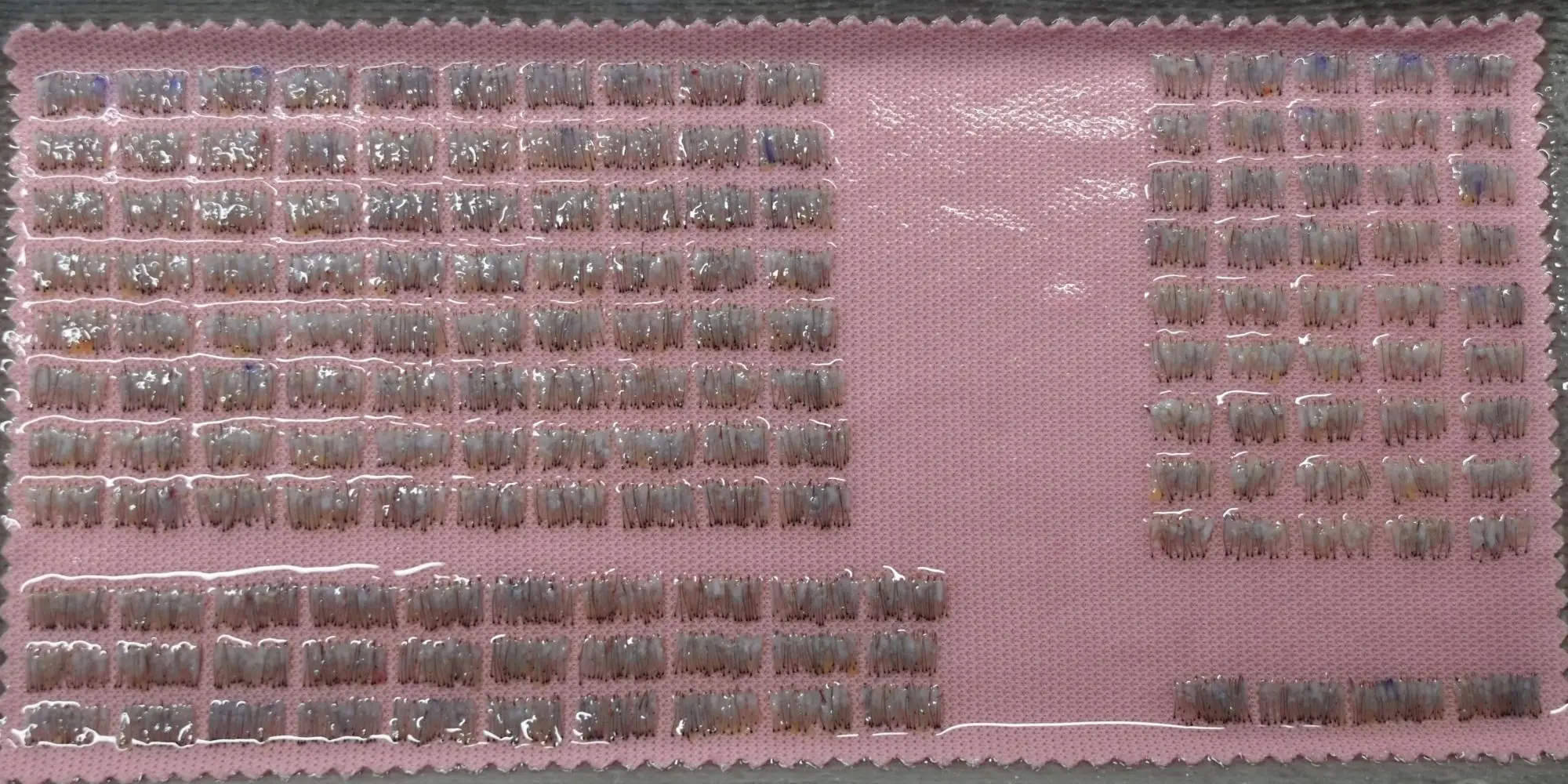
Does Asian Hair Require More Grafts?

How Can You Prevent Hair Loss Before a Hair Transplant?

What Should Asian Patients Look for in a Hair Restoration Physician?

The Takeaway

FAQs

Share this article:

Asian hair restoration follows the same fundamental principles as other hair transplant procedures, but treatment planning can differ because Asian hair may have distinct characteristics in terms of thickness, density, growth direction, pigmentation, and hair and scalp contrast.

These characteristics can influence hairline design, graft distribution, implantation angle, and the amount of donor hair required to achieve an appropriate result.

DHI, or Direct Hair Implantation, can be particularly relevant because it uses an implanter based approach that allows the physician to carefully control where and how individual grafts are placed.

The goal is not to use a different standard for Asian patients. It is to account for the individual characteristics of each patient’s hair and scalp.

 

What Is Asian Hair Restoration?

Asian hair restoration refers to hair restoration planned around the characteristics commonly observed in Asian patients.
It is not a separate type of hair transplant.

Techniques such as FUE, FUT, and DHI can all be used when clinically appropriate.

The difference is primarily in assessment and treatment planning.

A physician may consider hair caliber, density, follicular unit composition, hair direction, scalp contrast, facial proportions, donor availability, and the patient’s existing pattern of hair loss before deciding how restoration should be performed.

This individualized approach is important because Asian hair is not uniform. Hair characteristics can vary significantly between individuals and across different Asian populations.

How Is Asian Hair Different?

Asian hair is commonly described as relatively straight, highly pigmented, and larger in diameter, although there is considerable individual variation.

These characteristics can influence how hair loss appears and how transplanted hair should be planned.

For example, thicker hair can provide substantial visual coverage because each individual hair may contribute more to the appearance of density. At the same time, lower donor density in some patients may limit the number of available follicles.

Dark hair combined with lighter scalp skin can also increase the visual contrast between hair and scalp, making thinning more noticeable.

For this reason, Asian hair restoration may require careful consideration of:

  • Hair shaft thickness
  • Hair density
  • Follicular unit composition
  • Hair and scalp color contrast
  • Natural growth direction
  • Donor area quality
  • Pattern and progression of hair loss
  • Facial proportions
  • Desired hairline and density

Ethnicity alone should never determine a patient’s treatment plan.
Why Is Hairline Design Important in Asian Hair Restoration?

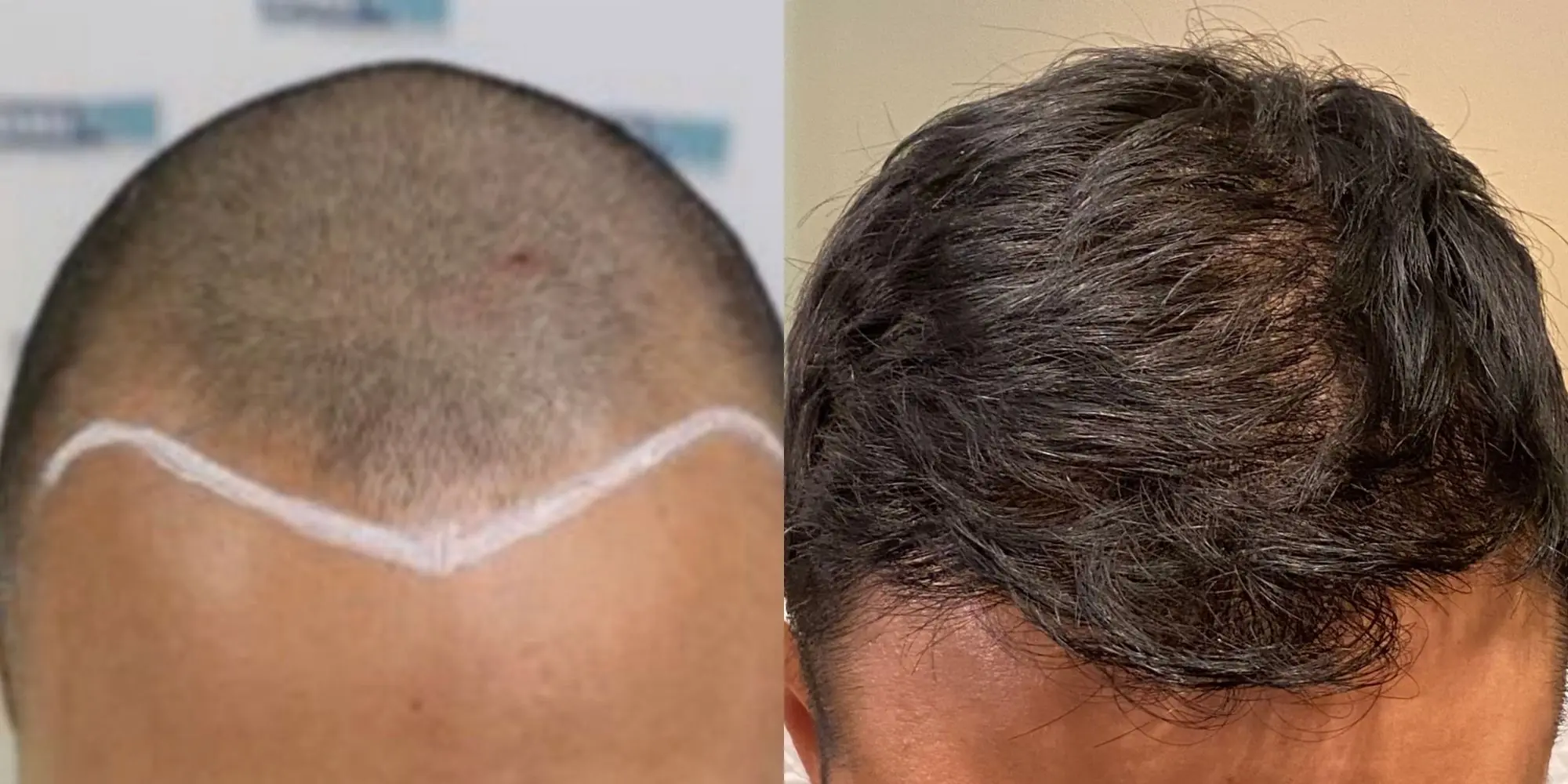
Hairline design is one of the most visible parts of a hair transplant.

Because Asian hair is often straight, dark, and relatively thick, an overly low, dense, or uniform hairline may appear more noticeable than a naturally irregular transition.

A well designed hairline should consider the patient’s facial proportions, age, existing hair, donor supply, and potential future hair loss.

The transition should also reflect natural hair growth. The frontal zone may use finer grafts and more irregular placement, while greater density can be introduced behind the hairline.

Graft angle and direction are equally important. Hair does not grow straight out from the scalp at the same angle everywhere. The physician must consider the natural direction of the surrounding hair when placing grafts.

For Asian hair restoration, the objective is therefore not simply maximum density. It is a hairline and density pattern that looks natural for the individual.
How Does DHI Work for Asian Hair?

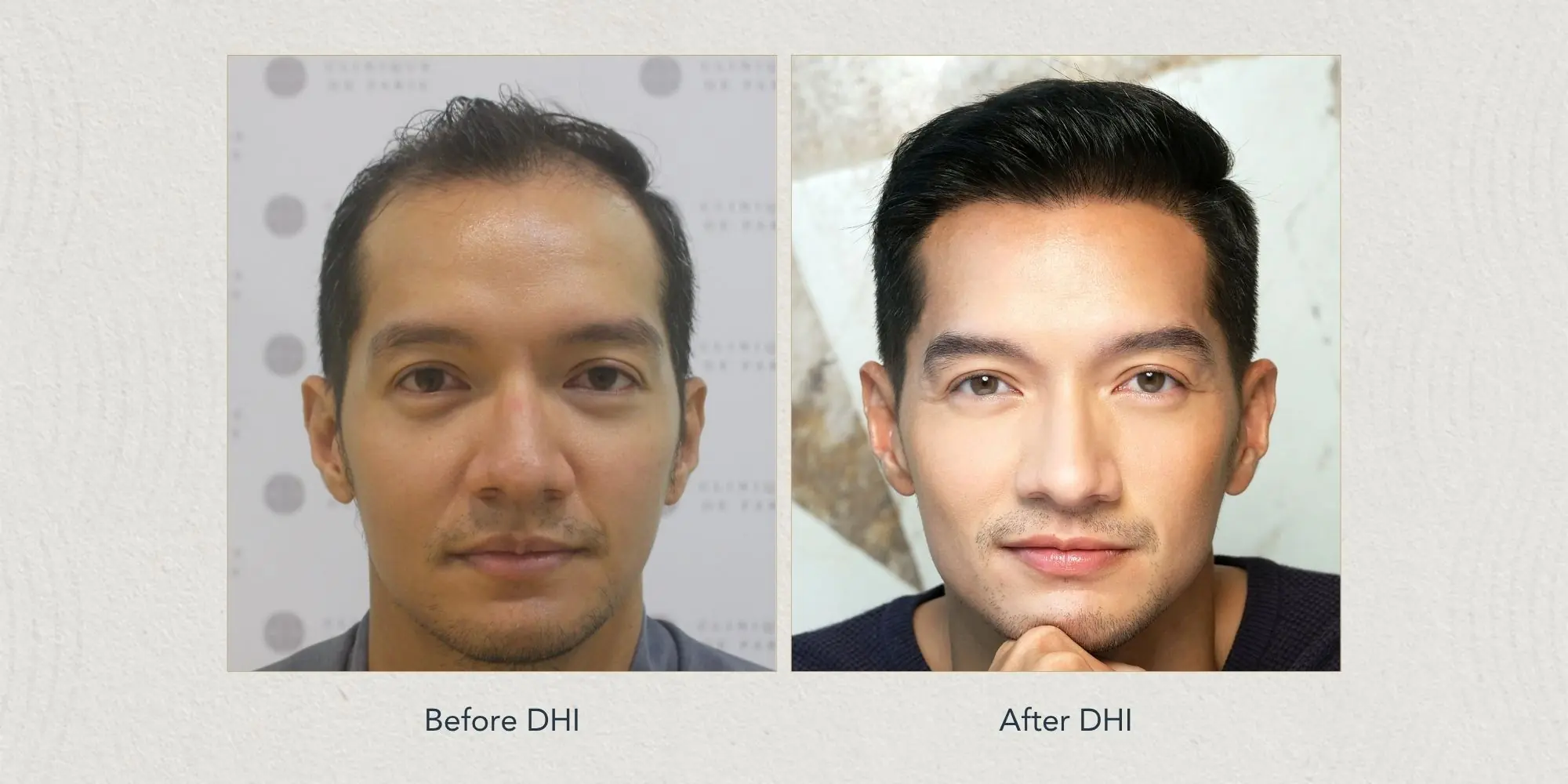
DHI, or Direct Hair Implantation, uses an implanter to place follicular unit grafts into the recipient area.

The technique allows the physician to control important elements of graft implantation, including:

  • Position
  • Angle
  • Direction
  • Distribution
  • Density

This level of control can be useful when restoring highly visible areas such as the frontal hairline and temples.

DHI is not automatically better for every Asian patient. The appropriate technique depends on the patient’s donor characteristics, recipient area, pattern of hair loss, scalp condition, and treatment objectives.

The value of DHI is therefore not simply the name of the technique. It is how the physician uses the technique to create an appropriate and natural distribution of hair.

Is DHI Different From FUE and FUT?

Yes. DHI, FUE, and FUT describe different aspects of hair transplantation.

Technique What it describes
DHI An implanter based method of placing follicular unit grafts
FUE Individual follicular units are extracted from the donor area
FUT A strip of donor scalp is removed and divided into follicular unit grafts

FUE and FUT primarily describe how grafts are harvested. DHI describes an approach to graft implantation.

This means they are not necessarily competing procedures.

For example, follicular units can be harvested using FUE and then implanted using an implanter.

The appropriate combination depends on the patient’s anatomy, donor supply, hair loss pattern, recipient requirements, and long term treatment plan.
Does Asian Hair Require More Grafts?

Not necessarily.

The number of grafts required depends on the extent and location of hair loss, donor density, hair caliber, follicular unit composition, desired density, and the patient’s long term hair loss pattern.

Thicker hair can provide strong visual coverage, meaning a patient may not necessarily need a larger graft count to achieve the desired appearance.

However, donor supply is limited. Using too many grafts in one area can reduce the options available for future restoration.

A responsible treatment plan therefore considers both the immediate aesthetic objective and the possibility of future hair loss.

How Can You Prevent Hair Loss Before a Hair Transplant?

Hair loss prevention begins with identifying the cause of hair loss.

Androgenetic alopecia is one of the most common causes, but hair loss can also result from conditions such as telogen effluvium, alopecia areata, inflammatory scalp disorders, nutritional deficiencies, and other medical conditions.

These causes do not necessarily require the same treatment.

For androgenetic alopecia, medical treatment may be considered to help preserve existing hair. Depending on the diagnosis, a physician may recommend monitoring, medication, scalp treatment, or other interventions before or alongside hair restoration.

This is particularly relevant for patients considering DHI because transplantation restores selected areas but does not necessarily stop native, non transplanted hair from continuing to thin.

A long term treatment plan should therefore consider both restoration and hair loss prevention.
What Should Asian Patients Look for in a Hair Restoration Physician?

Choosing a physician is more important than choosing a procedure name.

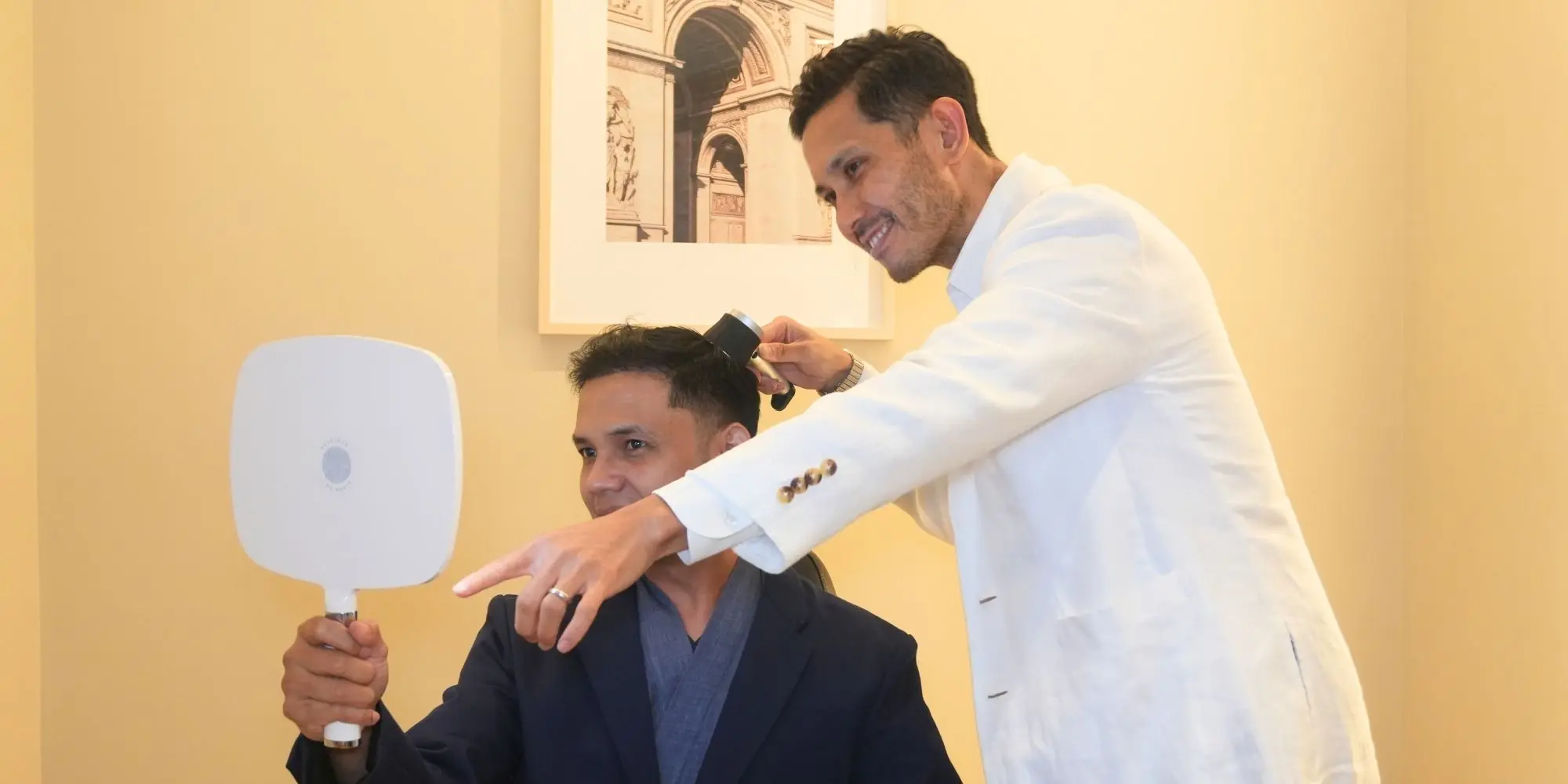
Patients should understand the physician’s training and experience in hair restoration, who will perform the medical and surgical portions of treatment, and how the treatment plan has been developed.

Before choosing DHI, useful questions include:

  • How will my donor area be assessed?
  • How will my hairline be designed?
  • Why is DHI appropriate for my case?
  • How will graft angle and direction be determined?
  • How will graft density be planned?
  • What happens if I continue to lose native hair?
  • How much donor hair do I have available for future needs?

A consultation should explain not only what will be done, but why that approach is appropriate for the individual patient.

The Takeaway

Asian hair restoration is not defined by one procedure. It is defined by individualized planning around the patient’s hair, scalp, facial proportions, and long term hair loss pattern.

Hair thickness, density, growth direction, and scalp contrast can influence how the hairline and graft distribution should be designed. DHI can provide controlled implantation, allowing careful attention to graft position, angle, direction, and distribution when appropriate.

Hair loss prevention should also be considered alongside transplantation. Understanding why hair is thinning can help determine whether medical management, DHI, or another restoration approach is appropriate.

At Clinique de Paris, our doctors assess the hair, scalp, donor area, and pattern of hair loss before recommending a treatment pathway.

For booking, you can visit our website at cliniquedeparis.com or click the link in our bio.

Next: 1 Year After Hair Transplant: What To Expect at 12 Months?

FAQs

Is Asian hair harder to transplant?

No. Asian hair is not inherently unsuitable for hair transplantation. However, characteristics such as hair thickness, density, growth direction, and scalp contrast can influence treatment planning.

Is DHI better for Asian hair?

Not automatically. DHI can be appropriate when controlled graft placement, angle, direction, and distribution are important, but suitability depends on the individual patient.

Does Asian hair need more grafts?

Not necessarily. Graft requirements depend on the patient’s degree of hair loss, donor supply, hair characteristics, desired density, and long term treatment plan.

How can I prevent hair loss?

Hair loss prevention depends on the underlying cause. Identifying the cause is the first step before choosing an appropriate treatment or management strategy.

What is the difference between DHI and FUE?

FUE describes how follicular units are extracted from the donor area. DHI describes an implanter based method of placing grafts into the recipient area.

Is DHI suitable for everyone?

No. Suitability depends on factors such as the cause and progression of hair loss, donor availability, scalp condition, recipient area, and treatment goals.


Ready for change? Book your consultation now at +63 917 676 5090 or visit cliniquedeparis.com. 

Next: Everything You Need to Know About Hair Transplants: A Beginner’s Guide to DHI

Book a FREE consultation with Clinique de Paris to discover the best solution for your hair loss.

our solutions

Hair to skin confidence

  • All Posts
  • Media and Articles
LET’S GET STARTED

Stay on top of it

Edit Template