August 12, 2026/


Hair Restoration
Face & Skin Rejuvenation
Face & Body Aesthetics
Solutions
News
/
Table of contents:
Can Fathers Experience Postpartum Hair Loss?
What Causes Postpartum Hair Loss in Men?
How Long Does Postpartum Hair Loss Last?
Is It Telogen Effluvium or Male Pattern Baldness?
When Should You See a Doctor?
Can Postpartum Hair Loss in Men Be Treated?
Conclusion
Frequently Asked Questions (FAQ)
Share this article:
Postpartum hair loss in men is an often-overlooked condition that can occur after the arrival of a baby. While mothers experience hair shedding due to hormonal changes, fathers may also notice increased hair loss caused by stress, sleep deprivation, and lifestyle changes. This guide explains why it happens, how long it lasts, and when to seek treatment.

Yes. Fathers can experience postpartum hair loss, although the mechanism differs from maternal postpartum hair shedding. In men, this phenomenon is usually not hormonal.
Instead, it is commonly linked to telogen effluvium, a temporary condition where physical and emotional stress pushes a larger number of hair follicles into their resting phase before they shed together several months later.
Each hair follicle cycles through:
The arrival of a newborn introduces several lifestyle changes that can collectively trigger telogen effluvium. The hair follicles themselves remain healthy, but the body temporarily shifts resources toward adapting to physical and emotional stress.
Common triggers include:
Stress-related postpartum hair loss usually appears two to four months after the triggering event, peaks around the third or fourth month, and gradually improves within six to nine months as normal hair cycling resumes.
| Stage | What Happens |
| Birth | Stress begins accumulating |
| 2–4 months | Hair shedding becomes noticeable |
| 3–4 months | Peak shedding |
| 6–9 months | Hair growth gradually returns |
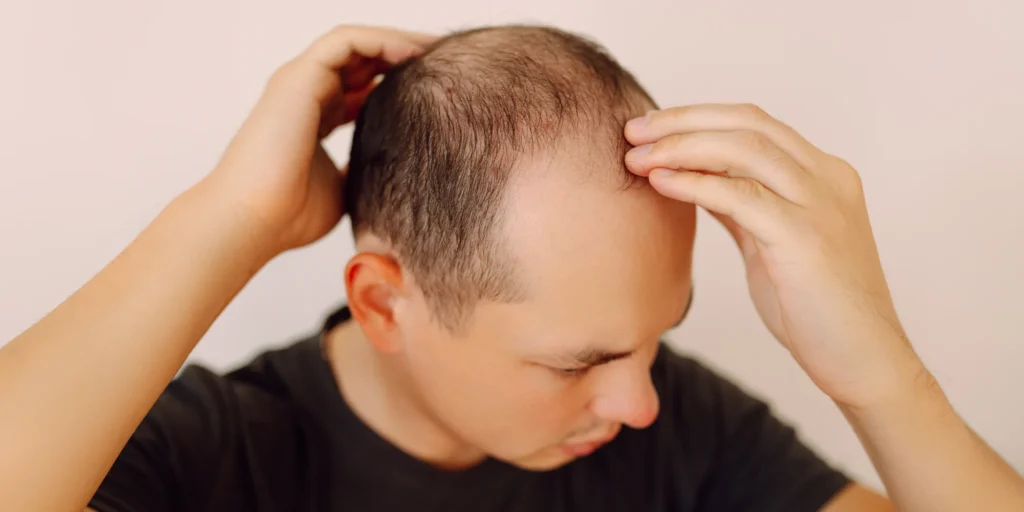
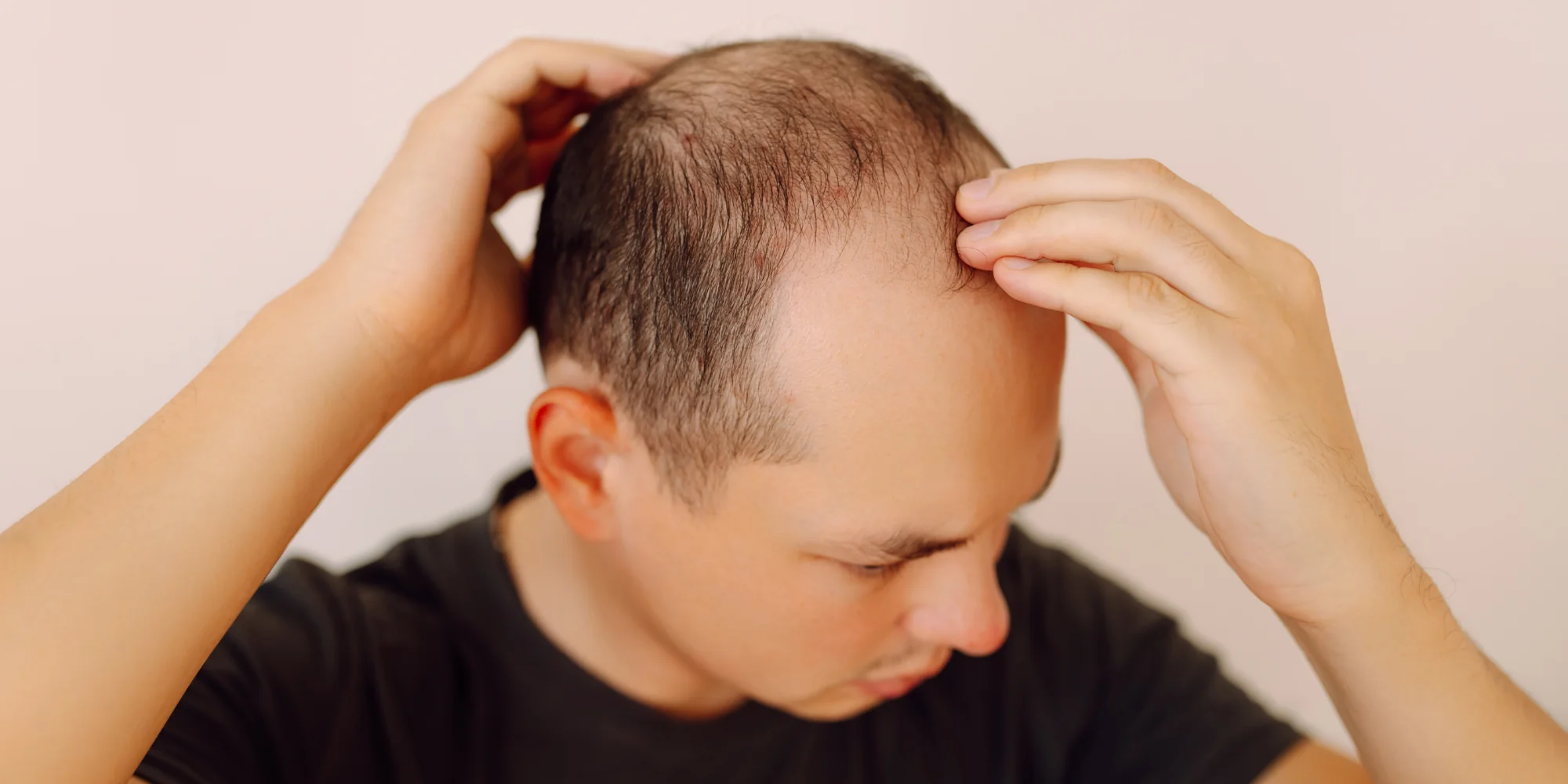
One of the most important steps in managing postpartum hair loss in men is determining whether the shedding is temporary telogen effluvium or an early sign of male pattern baldness. While both conditions can cause noticeable thinning, their causes and long-term outcomes are different.
| Feature | Telogen Effluvium | Male Pattern Baldness |
| Primary Cause | Physical or emotional stress | Genetic sensitivity to DHT (dihydrotestosterone) |
| Pattern | Diffuse shedding throughout the scalp | Receding hairline, temples, crown thinning |
| Onset | Usually 2–4 months after stress event | Gradual progression over years |
| Hair Follicles | Remain healthy and recoverable | Progressive miniaturization may occur |
| Duration | Often improves within 6–9 months | Usually continues without intervention |
| Treatment Approach | Stress management, scalp support, monitoring | Medical management and possible hair restoration |
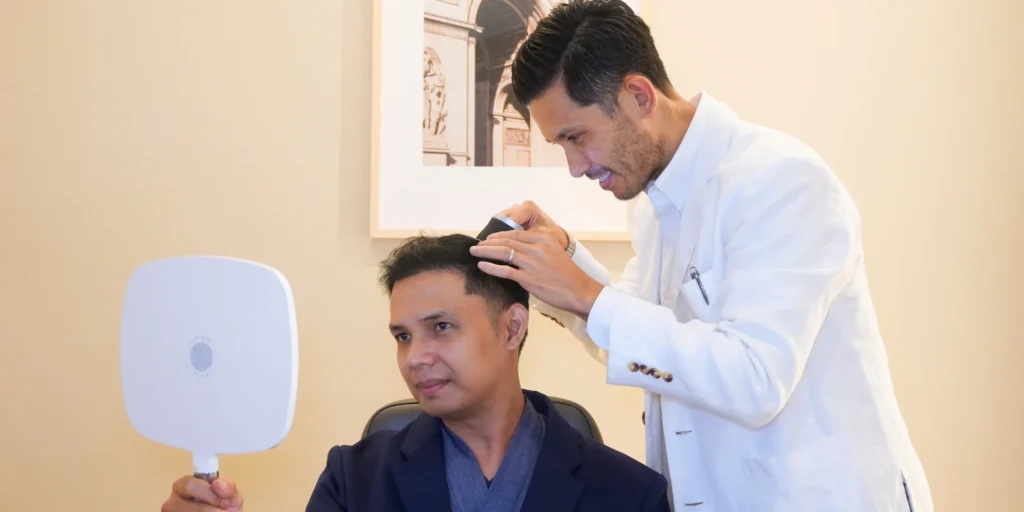
Not all postpartum hair shedding requires treatment, but persistent or progressive hair loss should be evaluated by a medical professional to determine the underlying cause.
You should consider a hair loss consultation if:
Treatment depends on whether the shedding is temporary or associated with an underlying hair loss condition.
For stress-related telogen effluvium, the focus is often on supporting healthy hair growth by addressing contributing factors, including:
For men with persistent thinning or signs of male pattern baldness, additional options may be considered.
Platelet Mesotherapy (PMT) is a regenerative treatment designed to support the scalp environment by delivering concentrated platelet-derived growth factors to targeted areas.
Before selecting any treatment, a comprehensive consultation is recommended.
Postpartum hair loss is not limited to mothers. Fathers can also experience increased shedding after childbirth, most commonly due to stress-related telogen effluvium caused by sleep disruption, emotional adjustment, and lifestyle changes.
Book a hair loss consultation at Clinique de Paris and discover the right approach for your hair restoration journey.
For fathers with stress-related telogen effluvium, hair growth usually begins to recover within 6–9 months as stress levels improve. If shedding continues beyond this, consult a hair loss specialist.
Hair shedding typically peaks 3–4 months after the arrival of a baby. In fathers, this often coincides with prolonged stress and sleep deprivation.
Temporary increased shedding is common during telogen effluvium. However, a receding hairline, crown thinning, or patchy hair loss may suggest male pattern baldness rather than temporary shedding.
Recovery focuses on improving sleep, nutrition, stress management, and scalp health. If hair loss persists beyond 9 months, a consultation can determine if further treatment is needed.
Men can reduce stress-related shedding by prioritizing sleep, eating a balanced diet, managing stress, and seeking early evaluation if thinning persists or follows a male pattern.