

News
/
Table of contents:
What Is the Hair Growth Cycle?
Stage 1: Anagen (Growth Phase)
Stage 2: Catagen (Transition Phase)
Stage 3: Telogen (Resting Phase and Shedding Phase)
Understanding the Anlagen Phase
Hair Growth Timeline: Duration and Influencing Factors
How Hair Growth Cycle Impacts Hair Loss
Treatments To Reduce the Shedding
What About Hair Restoration?
Frequently Asked Questions
Share this article:
Hair growth is not a linear process. Each hair follicle operates independently, cycling through phases of growth, transition, rest, and shedding. Together, these stages form the hair growth cycle, a biological rhythm that determines how hair grows, when it sheds, and how scalp density changes over time.
For many men and women, hair thinning can feel sudden. In reality, it is often the result of gradual changes within this cycle. Understanding how the hair growth cycle works provides clarity on why shedding occurs, why hair becomes finer over time, and how treatments such as Direct Hair Implantation (DHI) can improve outcomes.
The hair growth cycle consists of four main stages: Anagen (growth), Catagen (transition), Telogen (resting), and Exogen (shedding). Each stage has a specific duration and function, directly influencing hair density and regrowth patterns.
In this guide, we explain each stage of the hair growth cycle, the timeline of hair growth, and how understanding these phases supports effective hair restoration.
What Is the Hair Growth Cycle?
The hair growth cycle is the natural process that determines how hair grows, rests, and eventually sheds. Unlike other body tissues, hair follicles are not synchronized; each follicle operates independently. This is why your scalp maintains full coverage even while some hairs are shedding and new hairs are growing.
The hair growth cycle consists of three main stages: Anagen, Catagen, and Telogen, with shedding occurring as part of the Telogen phase rather than as a separate stage.
Each follicle passes through these phases at its own pace, creating the continuous turnover of hair that we observe on the scalp.
Understanding the hair growth cycle is especially important for anyone experiencing hair thinning or considering hair restoration. Timing procedures around these natural cycles can influence how well transplanted or treated follicles integrate and how soon visible results appear.
Stage 1: Anagen (Growth Phase)
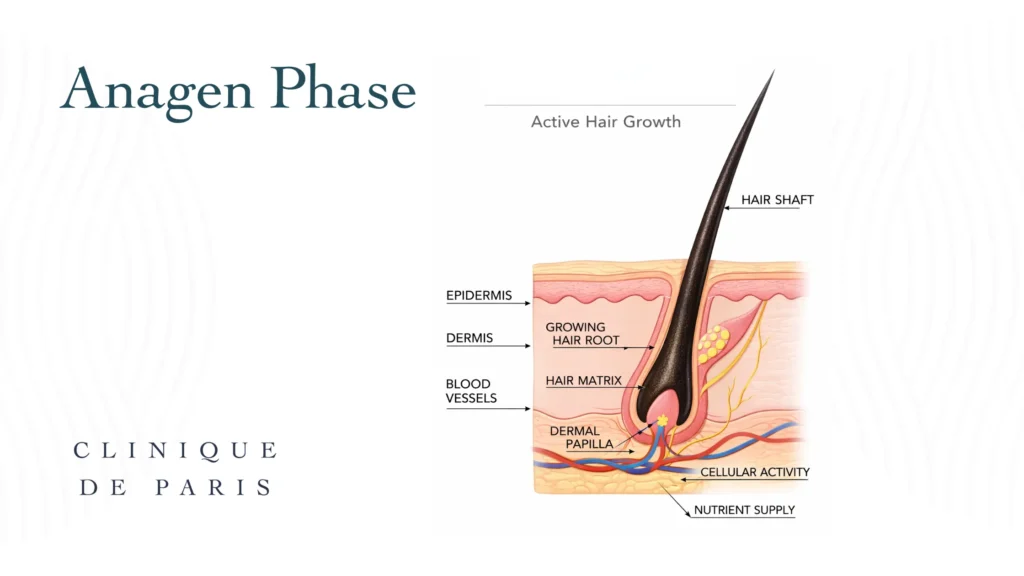
The Anagen phase is the active growth stage of hair follicles. During this phase, cells in the hair bulb divide rapidly, forming the hair shaft and lengthening the strand. This is when hair is at its thickest and strongest.
- Duration: Typically 2–7 years, though genetics and health can influence this
- Key functions: Hair length determination, active cell growth, follicle nutrient absorption
- Significance for treatments: Follicles in Anagen respond best to hair restoration procedures and supportive therapies
For patients undergoing hair restoration, follicles in the Anagen phase are ideal targets for implantation. Transplanted hairs continue their natural growth pattern, resulting in a dense, natural-looking hairline. Conversely, follicles outside Anagen may take longer to show visible results.
Stage 2: Catagen (Transition Phase)
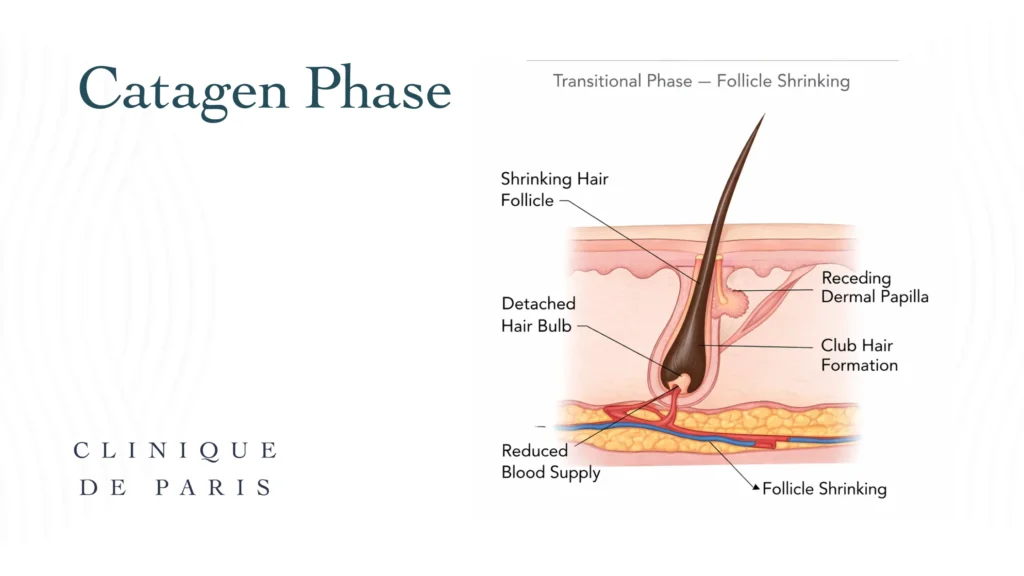
The Catagen phase is a brief transitional stage, acting as a “reset” for hair follicles. During this phase, growth slows, and the hair bulb detaches from its blood supply, preparing the follicle for rest.
- Duration: 2–3 weeks
- Key functions: Follicle regression, cessation of hair growth, preparation for shedding
- Impact on appearance: Hair remains in place but is no longer actively growing
Even though Catagen is short, it plays a critical role in ensuring follicles are ready for the next growth cycle. Understanding Catagen helps explain temporary changes in hair density or hair that appears thinner but is not permanently lost.
Stage 3: Telogen (Resting Phase and Shedding Phase)
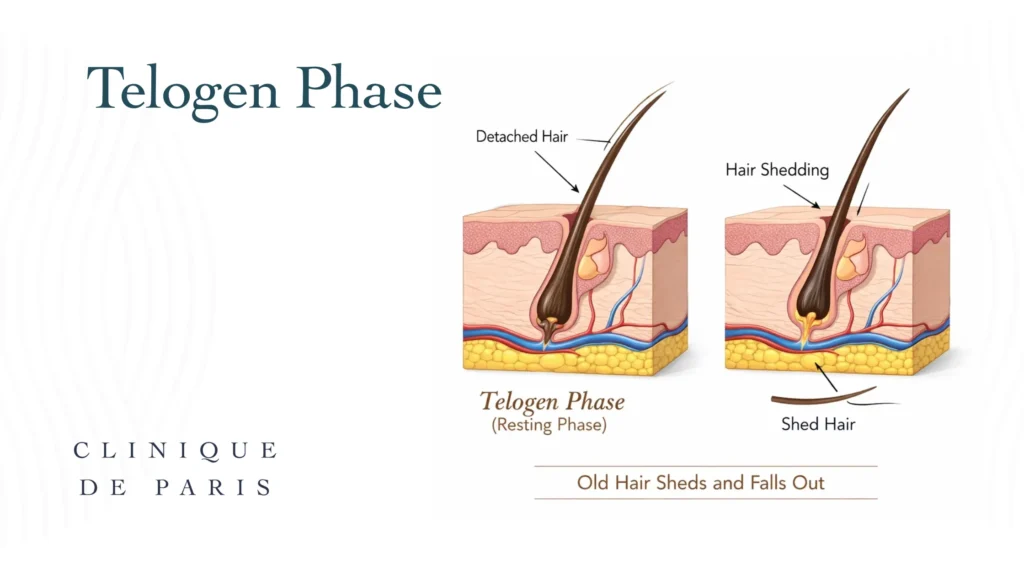
The Telogen phase is the resting stage of the hair follicle, during which hair growth stops and the follicle prepares for renewal. Importantly, this is also the phase where hair shedding occurs.
-
- Duration: 2–4 months
- Key functions: Shedding old hair, preparing follicle for next Anagen phase
- Impact on hair restoration: Newly transplanted hairs may shed temporarily during Telogen, a process often referred to as “shock loss,” before follicles return to the Anagen growth phase.
During Telogen, the follicle is inactive while the hair strand stays anchored.
Shedding occurs within the Telogen phase itself, as the hair strand is gradually released from the follicle as part of the natural renewal process.
Understanding Telogen is critical in hair restoration, as it explains why there may be a delay before visible regrowth begins.
Understanding the Anlagen Phase
The Anagen phase refers to the early formation and development of a hair follicle. While not traditionally included in the three-stage hair growth cycle, it represents the foundational stage where a follicle begins to form before entering active growth.
This phase is more commonly discussed in developmental biology and regenerative medicine, but it has increasing relevance in advanced hair restoration.
This reflects a broader principle: effective hair restoration is achieved by working in alignment with the biology of the follicle.
Hair Growth Timeline: Duration and Influencing Factors
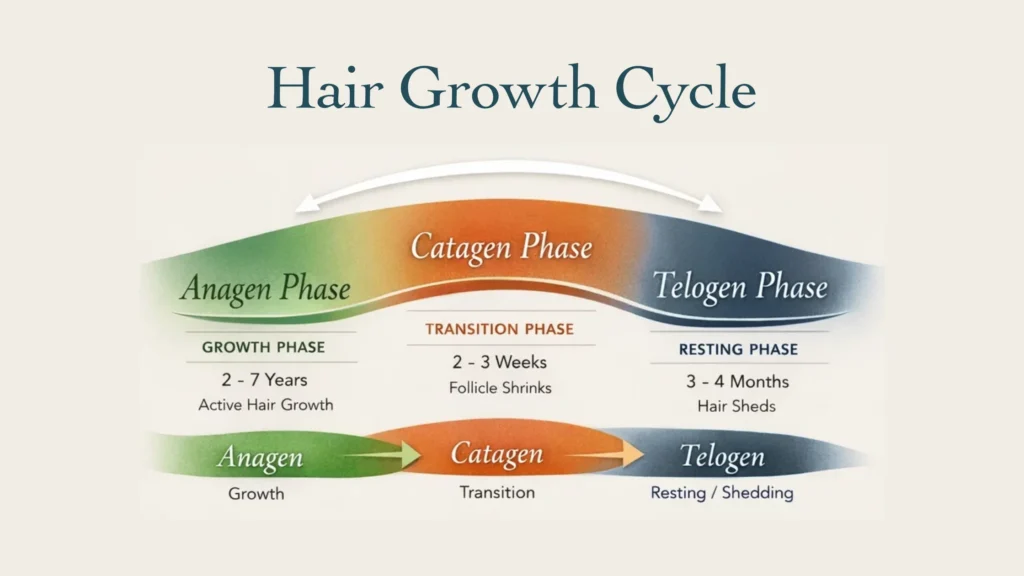
The hair growth cycle timeline varies across individuals but generally follows this pattern:
- Anagen (2–7 years) – active growth
- Catagen (2–3 weeks) – transition
- Telogen (2–4 months) – resting and shedding
Factors influencing this timeline include:
- Genetics: Determines Anagen length, hair density, and growth speed
- Age: Growth slows over time, and Telogen may lengthen
- Nutrition: Protein, iron, vitamins, and minerals directly affect follicle function
- Medical conditions: Hormonal changes, thyroid issues, and scalp conditions can disrupt cycles
- Stress and lifestyle: Physical or emotional stress can trigger more follicles to enter Telogen, leading to temporary shedding
How Hair Growth Cycle Impacts Hair Loss
Hair loss occurs when follicles fail to remain in or re-enter the Anagen phase, or when more follicles shift into Telogen, leading to increased shedding.
Common patterns include:
- Male pattern baldness: Shortened Anagen phase in certain follicles
- Diffuse thinning in women: Many follicles enter Telogen simultaneously
- Postpartum or stress-induced shedding: Telogen effluvium causes temporary shedding
Understanding these mechanisms helps patients approach hair restoration with realistic expectations. Treatments can be timed to maximize follicles in Anagen and support recovery during subsequent cycles.
Treatments To Reduce the Shedding
Modern hair restoration extends beyond procedures by actively supporting the biology of the hair growth cycle. Effective treatments work by prolonging the Anagen phase and reducing premature transition into Telogen, helping maintain density and minimize shedding.
Key treatments include:
- Finasteride
Helps reduce DHT, which shortens the Anagen phase in androgenetic alopecia. - Minoxidil
Stimulates follicles and promotes earlier re-entry into the Anagen growth phase. - Platelet Mesotherapy (PMT) / PRP
Enhances blood supply and delivers growth factors that support follicle longevity. - Exosome Therapy
Signals follicles to remain in the growth phase and improves cellular repair.
At Clinique de Paris, these treatments are integrated into personalized plans to stabilize hair loss, improve transplant outcomes, and maintain long-term density.
What About Hair Restoration?
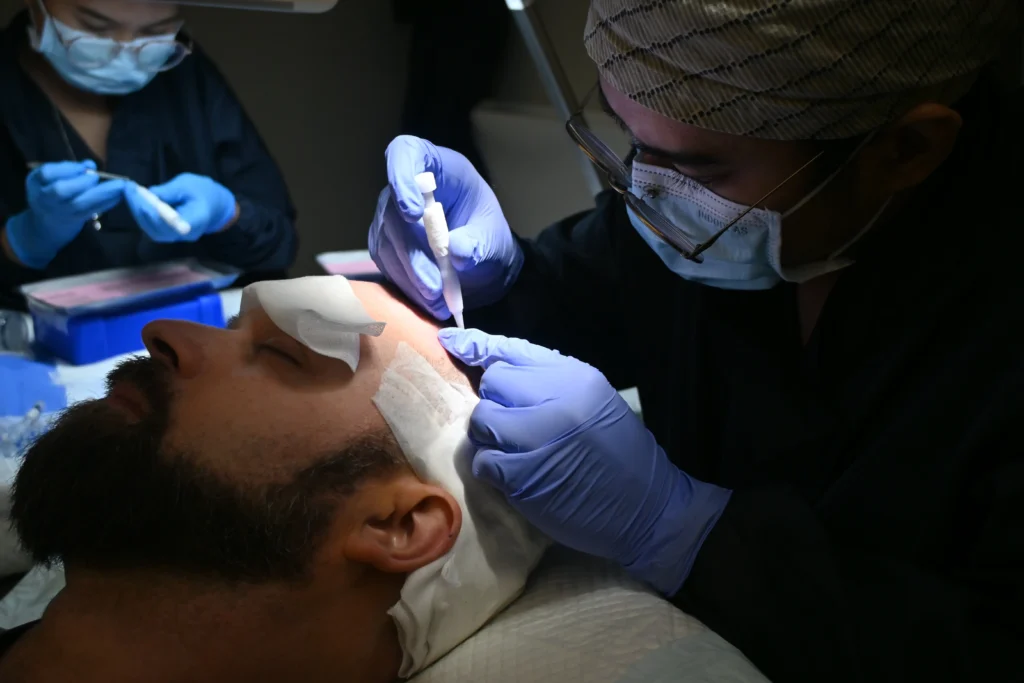
At Clinique de Paris, hair restoration is carefully aligned with the natural hair growth cycle to ensure optimal results and long-term success.
The process begins with a pre-treatment assessment, where detailed photos and scalp analysis identify which follicles are active in the Anagen (growth) phase. This allows doctors to strategically plan procedures for maximum effectiveness.
During DHI implantation, follicles are placed according to the natural direction and pattern of hair growth, ensuring seamless integration and a natural-looking hairline.
Following the procedure, post-treatment care focuses on supporting the transition back into the Anagen phase, promoting healthy and consistent regrowth.
By aligning treatments with the hair growth cycle, patients benefit from:
- Optimized follicle survival
- Faster visible results
- Natural density and hairline design
For example, patients may experience temporary shedding within the first 3–4 weeks after DHI (Telogen/Exogen phase), followed by new growth around months 3–4 as follicles re-enter the Anagen phase. Full results typically become visible after 12 months, reflecting the complete hair growth cycle.
To further enhance results, supportive treatments play a key role in maintaining follicle health and prolonging the growth phase. These include:
- Platelet Mesotherapy (PMT): Stimulates follicles and prolongs Anagen
- PRP treatments: Improve blood supply and nutrient delivery
- Topical solutions and supplements: Address nutritional deficiencies
- Lifestyle adjustments: Support overall scalp and hair health
Clinique de Paris integrates these treatments into personalized care plans, combining science, precision, and patient-focused strategies. Doctor-led DHI procedures, natural hairline design, structured recovery protocols, and ongoing monitoring ensure follicles remain in the optimal growth phase while minimizing unnecessary shedding.
As a result, patients experience predictable, natural-looking outcomes, with hair regrowth that follows the body’s natural timeline.
Frequently Asked Questions
Q1: What is the hair growth cycle?
The hair growth cycle includes three stages: Anagen (growth), Catagen (transition), and Telogen (resting and shedding). Each follicle follows its own independent rhythm, allowing continuous hair renewal across the scalp.
Q2: Why does hair shed after a transplant?
Temporary shedding occurs during the Telogen phase and is a normal part of the hair cycle.. This is a normal part of the cycle, often called shock loss, and it precedes new hair growth as follicles return to the Anagen phase.
Q3: How long until I see full results?
Initial growth typically begins around 3–4 months, as follicles re-enter the Anagen phase. Full results are usually visible by 12 months, following the natural hair growth cycle.
Q4: Can hair growth be accelerated?
While the cycle cannot be rushed biologically, supportive treatments such as Platelet Mesotherapy (PMT) and PRP can improve follicle health, helping hairs transition more efficiently into the Anagen growth phase.
Q5: Does age affect hair growth cycles?
Yes. With age, the Anagen phase may shorten, while more follicles may shift into Telogen and Exogen, leading to increased shedding and reduced density. However, proper treatment and care can help maintain healthy hair growth.
Book a consultation with our experts to assess your hair growth cycle and explore a personalized plan combining DHI and medical therapies to support long-term hair growth.
Book a FREE consultation with Clinique de Paris to discover the best solution for your hair loss.
- All Posts
- Media and Articles