October 15, 2026/


Hair Restoration
Face & Skin Rejuvenation
Face & Body Aesthetics
Solutions
What does a hair transplant cost?
Table of contents:
What to look for in a quality hair transplant
So how much does it cost?
Conclusion
Share this article:
Hair transplant pricing varies widely across clinics and countries, and for most patients, the differences are not immediately intuitive. Two clinics may offer what appears to be the same procedure, yet the cost can differ significantly.
This is because hair transplant pricing is not determined by a single variable such as graft count. It is shaped by a combination of surgical technique, medical expertise, procedural complexity, and the level of planning and care involved before and after surgery.
Understanding these differences is essential if you are evaluating whether a higher-priced procedure is justified or whether a lower-cost option may carry hidden long-term trade-offs.
Hair transplant cost varies depending on the country, technique, and complexity of the procedure. At Clinique de Paris, DHI Hair Transplant procedures start at ₱250,000, with treatment plans tailored to each patient’s individual needs.
For comparison, hair transplant procedures in other established markets often command significantly higher price points:
But if you would like to understand the actual pricing, including the number of grafts commonly required for different stages of hair loss, you can read our guide: How Much is a Hair Transplant in the Philippines?

Hair transplant cost is determined by multiple clinical and technical factors rather than a fixed procedure fee. While many patients focus on the final price, the true cost of a hair transplant is influenced by the complexity of the procedure, the expertise of the medical team, and the level of precision required to achieve natural, long-lasting results.
The primary factors that influence hair transplant cost include:
Each of these factors contributes to the time, skill, technology, and medical oversight required throughout the procedure.
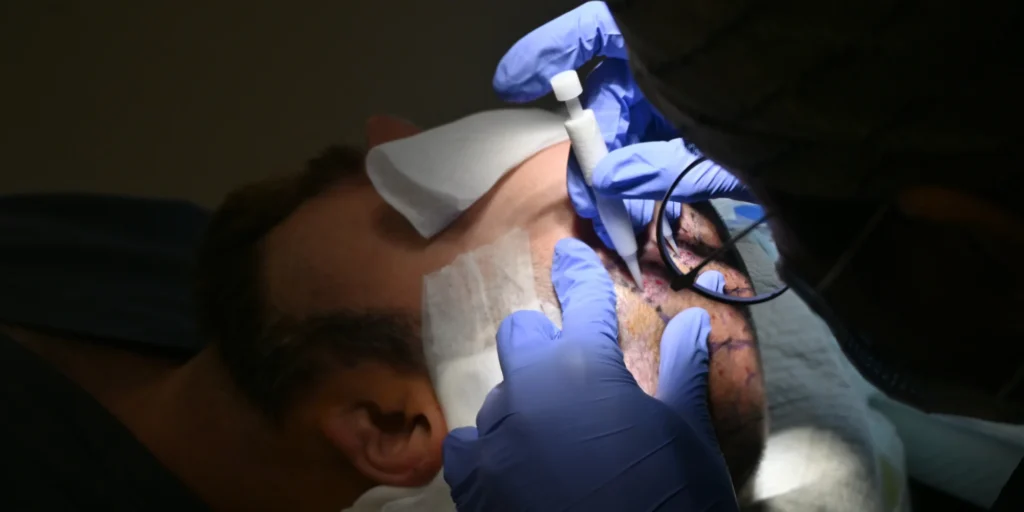
The surgical technique used plays a central role in determining cost because it directly affects procedural complexity and precision requirements.
FUT (Follicular Unit Transplantation) involves removing a strip of scalp to harvest grafts. It is generally less time-intensive but more invasive. FUE (Follicular Unit Extraction) involves extracting individual follicular units, requiring greater precision and surgical time.
DHI (Direct Hair Implantation) sits at the premium end of modern hair restoration. It allows follicles to be implanted directly using a specialized implanter device, enabling more control over angle, depth, and direction during placement.
This level of control is particularly important in hairline design and density refinement, where subtle variations significantly affect natural appearance.
One of the most significant but least visible factors in hair transplant pricing is the expertise of the medical team performing and designing the procedure.
Experienced surgeons are responsible for decisions that directly affect long-term outcomes, including donor area planning, graft distribution, hairline architecture, and future hair loss forecasting.
According to Dr. Rafael Fortus, Medical Director of Clinique de Paris, successful hair transplantation is not defined by graft placement alone, but by how each graft is planned within the patient’s long-term hair restoration strategy.
Higher clinical expertise typically translates into more deliberate planning, greater procedural precision, and stronger long-term preservation of donor resources.

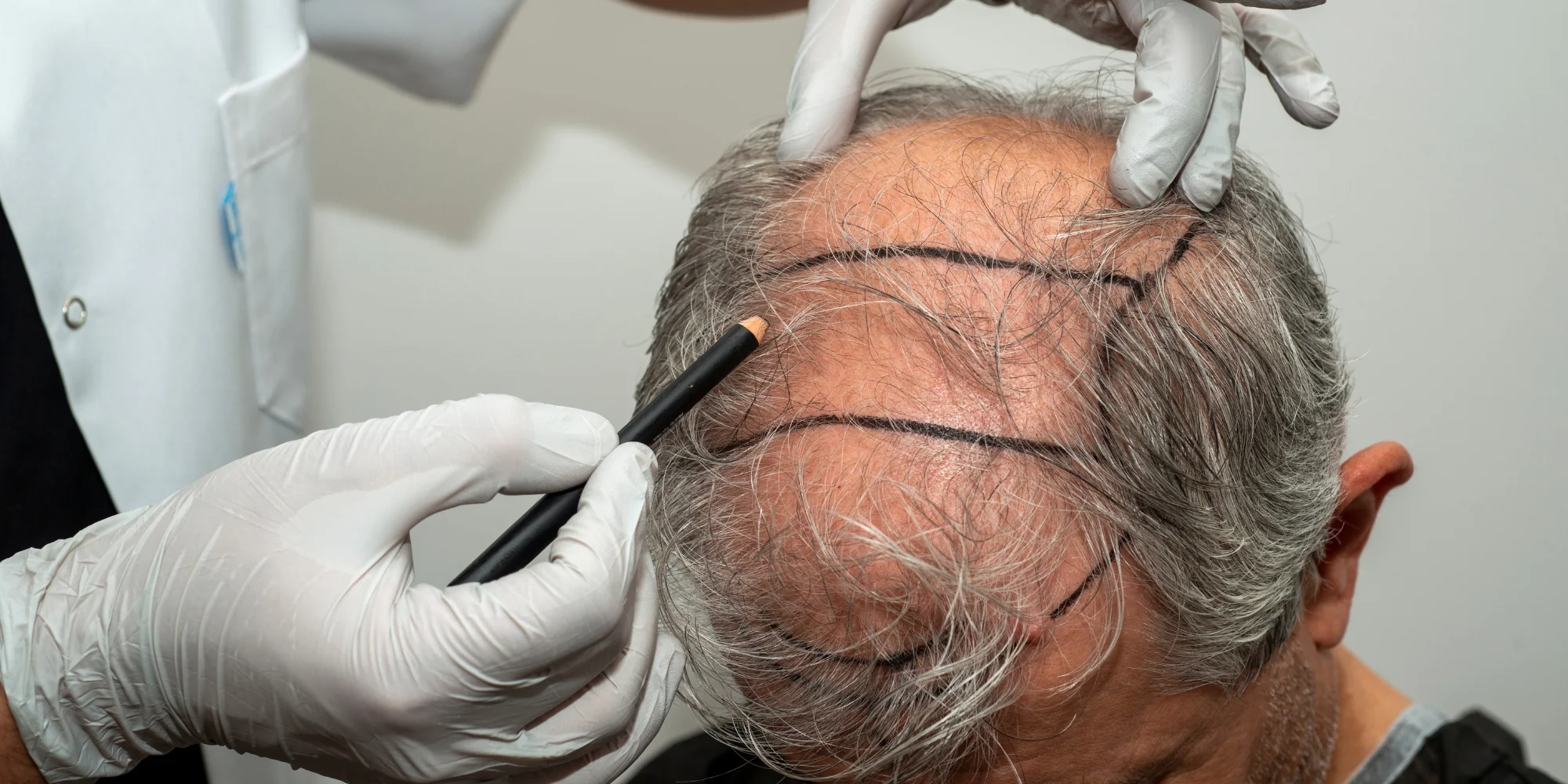
Hairline design is one of the most technically demanding aspects of hair transplantation and often influences both cost and outcome quality.
A natural hairline requires careful consideration of facial proportions, age appropriateness, directional flow, and gradual density transition. It must blend seamlessly with existing hair while accounting for future hair loss progression.
More advanced hairline design requires additional planning time and meticulous implantation, particularly in cases where restoration must look undetectable under close inspection.
Poorly designed hairlines are among the most difficult outcomes to correct, which is why precision in this phase carries significant value.
Once follicles are extracted, their survival depends heavily on how they are handled before and during implantation.
Key factors influencing graft survival include:
Techniques that minimize graft handling and reduce time outside the body generally improve survival rates, which in turn affect overall density and long-term results.
Higher precision methods typically require more specialized tools and trained personnel, contributing to higher procedural costs.
Hair transplant cost is also shaped by the level of care surrounding the procedure itself, not just the surgical act.
A comprehensive treatment pathway may include:
These elements contribute to both safety and outcome predictability, and are often more developed in higher-tier clinical settings.
Hair restoration should be viewed as a staged medical process rather than a single intervention.

A higher-priced hair transplant is not simply a matter of expense, it is better understood as an investment in long-term hair stability, natural aesthetics, and future treatment flexibility.
The difference is usually not in the idea of “more or less hair,” but in how the procedure is designed and executed. Lower-cost approaches often focus on efficiency and volume, while higher-value procedures prioritize precision in hairline design, graft survival, and careful donor area management.
From a long-term perspective, the value of a hair transplant is rarely defined at the point of surgery. It is defined by how naturally the hair continues to grow, how stable the density remains over time, and how well the donor area is preserved for any future needs.
When assessed properly, the discussion shifts away from upfront pricing and toward the quality and durability of the medical strategy behind the result.
If you are considering hair restoration, a structured consultation can help determine which approach aligns with your hair loss pattern, donor capacity, and long-term restoration plan.

Hair transplant pricing reflects far more than the number of grafts or the duration of a procedure. It is the result of multiple clinical and technical factors that directly influence both immediate outcomes and long-term hair stability.
A proper evaluation of cost should focus on medical precision, design quality, and preservation strategy, not just the initial figure.
If you are assessing treatment options for hair thinning or a receding hairline, a clinical evaluation can help determine the most appropriate approach based on your individual hair loss pattern and long-term restoration goals.
Book a consultation here.
Prices vary due to differences in technique, surgeon expertise, procedural complexity, graft handling protocols, and the level of pre- and post-operative care included.
Surgical technique and medical expertise are typically the primary drivers, followed by case complexity and design requirements.
Graft count influences pricing, but it does not fully determine it. How grafts are extracted, handled, and implanted is equally important.