August 12, 2026/


Hair Restoration
Face & Skin Rejuvenation
Face & Body Aesthetics
Solutions
News
/
Table of contents:
What Is Oral Finasteride?
How Does Oral Finasteride Work?
Types and Forms of Finasteride
Oral Finasteride Dosage
Who Is a Good Candidate in Taking the Oral Finasteride?
Oral vs Topical Finasteride
Clinique de Paris Topical Hair Treatments
Combination Therapy: Finasteride + Minoxidil Approach
Frequently Asked Questions
Conclusion
Share this article:
Hair loss affects millions of men worldwide, often beginning earlier than expected. Receding hairlines, crown thinning, and visible scalp exposure are common signs of androgenetic alopecia, more widely known as male pattern baldness and female pattern hair loss.
One of the most established medical treatments available today is oral finasteride, a prescription medication used to slow hair loss progression and help preserve existing hair density.
However, modern hair restoration is no longer limited to oral medication alone. At Clinique de Paris, treatment strategies often include topical scalp-based therapies and combination approaches using Minoxidil and Finasteride, designed to target hair loss through multiple biological pathways.
Understanding the cause and progression of hair loss remains the foundation of effective treatment.
Oral finasteride is a prescription medication used to treat male pattern hair loss or androgenetic alopecia and benign prostatic hyperplasia (BPH). It works by inhibiting the5-alpha-reductase enzyme, reducing dihydrotestosterone (DHT) levels to prevent hair follicle miniaturization and prostate enlargement.
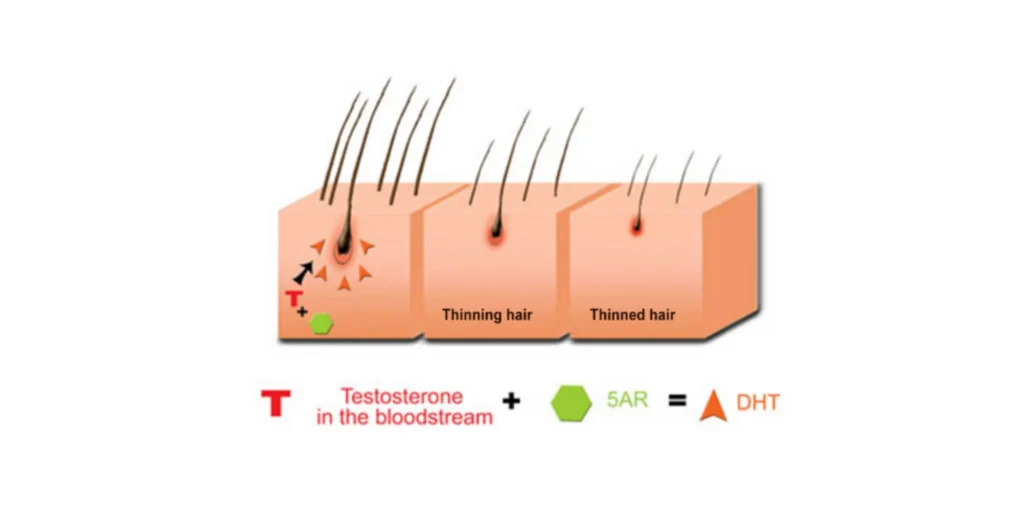
It works by reducing levels of dihydrotestosterone (DHT), the hormone responsible for follicle miniaturization in genetically predisposed individuals.
By lowering DHT, oral finasteride helps slow the progression of hair thinning and supports long-term preservation of existing hair.
Male pattern hair loss is primarily driven by genetic sensitivity to DHT.
Elevated DHT levels can:
Patients typically use it to:
Results are gradual and require consistent use over time.
This is the most widely used form of treatment. Taken once daily, it works systemically to reduce DHT levels throughout the body.
Benefits:
It is often used as a foundational medical treatment for male pattern hair loss.
The appropriate dosage of oral finasteride is determined by the specific condition being addressed and is typically administered with or without food. For those managing hair loss, the standard therapeutic dose is 1 mg once daily, which is widely utilized in clinical practice for effective DHT suppression. Patients generally observe results within a 3–6 month timeline.
In cases of benign prostatic hyperplasia (BPH) or an enlarged prostate, the recommended dosage is 5 mg daily, with symptom relief typically occurring after approximately 6 months of consistent use.
For comprehensive guidance on usage, dosing protocols, and safety precautions, it is essential to consult with your physician during a clinical evaluation. So patients should only take finasteride under medical supervision, as consistency and proper dosing are essential for long-term effectiveness. At Clinique de Paris, all prescriptions are based on clinical evaluation and individualized risk assessment.

Oral finasteride is typically considered for patients with:
Not all hair loss is hormonal, and accurate diagnosis is essential before treatment.
Hair restoration is a gradual process.
General timeline:
But the results depend on:
Stopping treatment may allow hair loss to gradually resume.
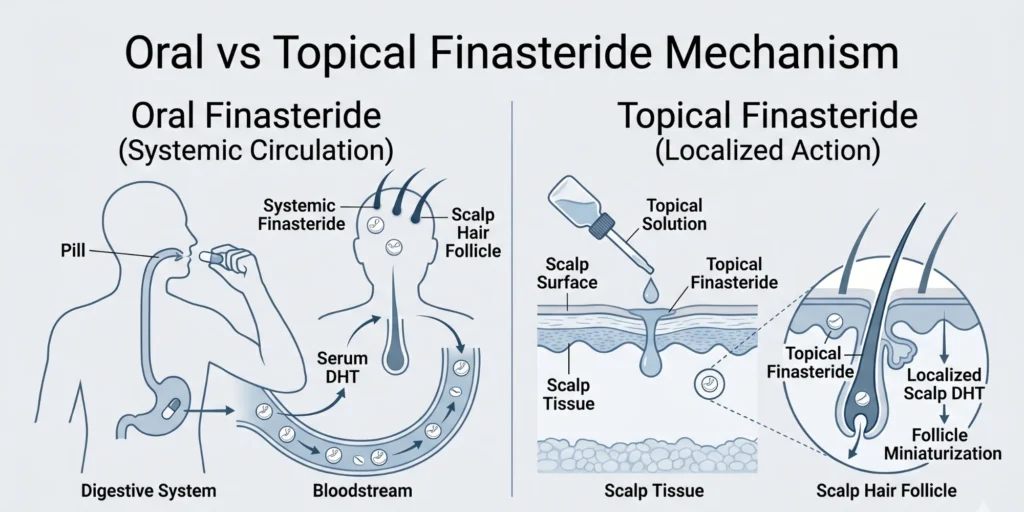
Clinique de Paris evaluates both oral and topical treatment approaches to determine the most appropriate strategy based on each patient’s hair loss pattern, medical history, and treatment goals.
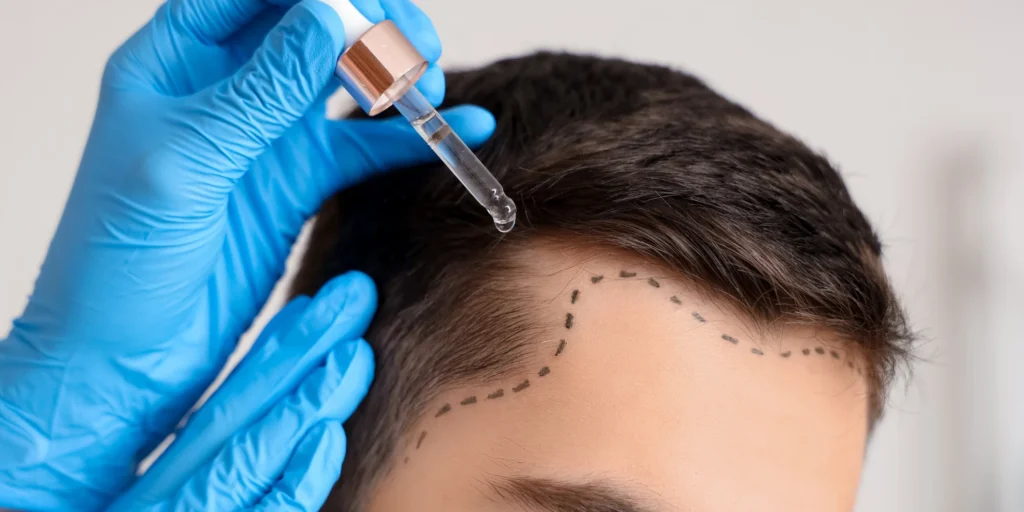
At Clinique de Paris, oral medication is only one part of a broader medical strategy.
A significant component of treatment includes topical scalp-based therapies, designed to act directly at the follicular level.
These topical approaches are commonly used for patients who:
This allows for a more tailored and controlled treatment strategy based on individual diagnosis.
Yes. Combination therapy is a central part of modern hair restoration at Clinique de Paris.
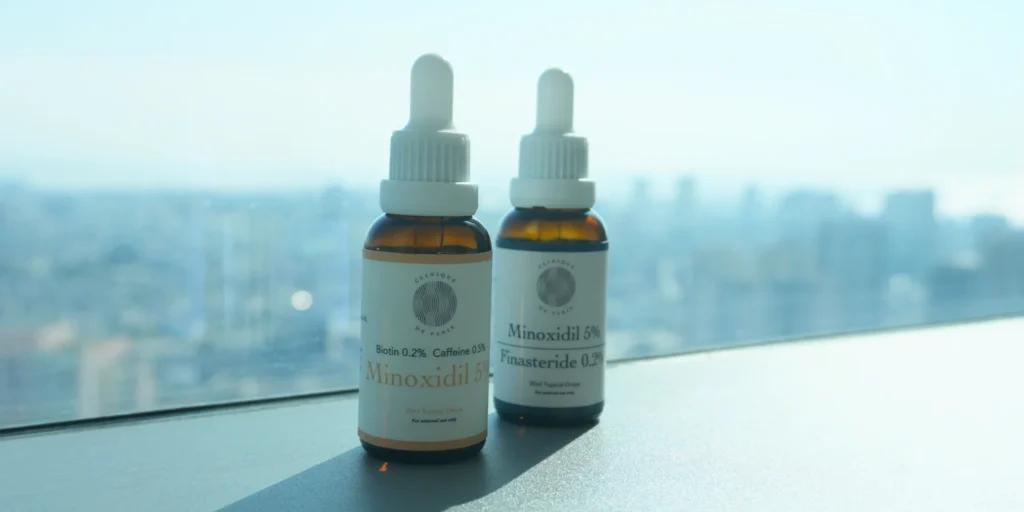
A core element of modern hair restoration at Clinique de Paris is the combination of Finasteride and Minoxidil, used in both oral and topical treatment planning depending on patient suitability.
This combination targets hair loss through two complementary mechanisms:
Together, they address both the cause and the growth environment of hair loss.
This dual-pathway strategy is commonly used for:
Medical therapy helps preserve existing hair but cannot restore inactive follicles.
A hair transplant may be recommended for:
At Clinique de Paris, Direct Hair Implantation (DHI) is performed to achieve:
Medical and surgical treatments are often combined for optimal outcomes.
Yes. It reduces DHT levels, slows hair loss progression, and helps preserve existing hair with consistent use under medical supervision.
Results typically begin with reduced shedding in 2–3 months, with visible improvement in 6–12 months.
No. Its effects are maintained only while taking the medication. Hair loss may resume after discontinuation.
A small percentage of patients may experience reduced libido, erectile changes, or mood-related effects.
Yes. It is commonly combined with Minoxidil, topical therapies, and hair restoration procedures for enhanced results.
Oral finasteride remains a cornerstone treatment for androgenetic alopecia, primarily by reducing DHT and slowing follicular miniaturization.
However, modern hair restoration requires a broader, structured approach.
At Clinique de Paris, treatment strategies often include:
The goal is not only to slow hair loss, but to build a personalized, multi-layered treatment plan based on each patient’s condition and long-term hair goals.
In the landscape of modern hair restoration, the standard of care has evolved into a precision-based and medically guided discipline, increasingly defined by individualized combination-driven protocols.