September 11, 2026/


Hair Restoration
Face & Skin Rejuvenation
Face & Body Aesthetics
Solutions
News
/
Table of contents:
What Is Alopecia?
Common Types of Alopecia
Why Hair Loss Still Carries a Stigma
When Should You Seek Professional Advice?
Treatment Options for Alopecia
Conclusion
Frequently Asked Questions
Share this article:
This Hair Loss Awareness Month, we aim to educate on the causes of hair thinning, break the social stigma, and share medical and cosmetic resources for conditions like alopecia, pattern baldness, and stress-related shedding. In the Philippines, hair has long been associated with beauty, youth, and vitality. Whether it’s thick, healthy hair for women or a full head of hair for men, appearance often plays a significant role in how people perceive themselves and others. As a result, experiencing hair loss can become more than a medical concern: it can also carry an emotional and social burden.
In the Philippines, many hesitate to seek help because of different factors like lack of awareness, myths, embarrassment or the belief that hair loss is simply something they have to accept. However, alopecia is a medical condition with many possible causes, and understanding the type of hair loss you have is the first step toward appropriate treatment.
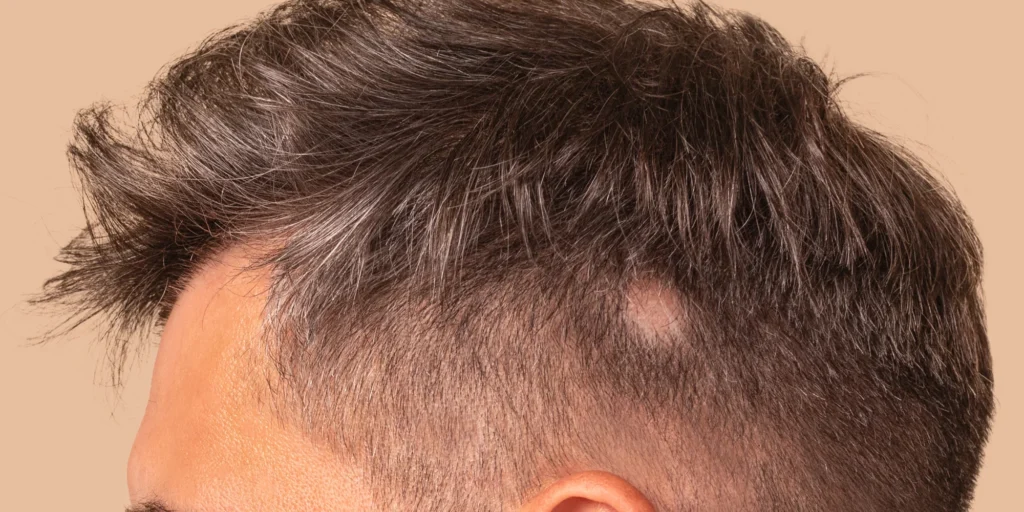
Alopecia is the medical term for hair loss. It may affect the scalp alone or involve hair across the body, depending on its underlying cause. Hair loss can be temporary or permanent and may result from genetics, autoimmune conditions, stress, hormonal changes, nutrition deficiency, or certain illness, medications or treatments.
Because different forms of alopecia require different treatment approaches, obtaining an accurate diagnosis is essential before starting any hair restoration plan.
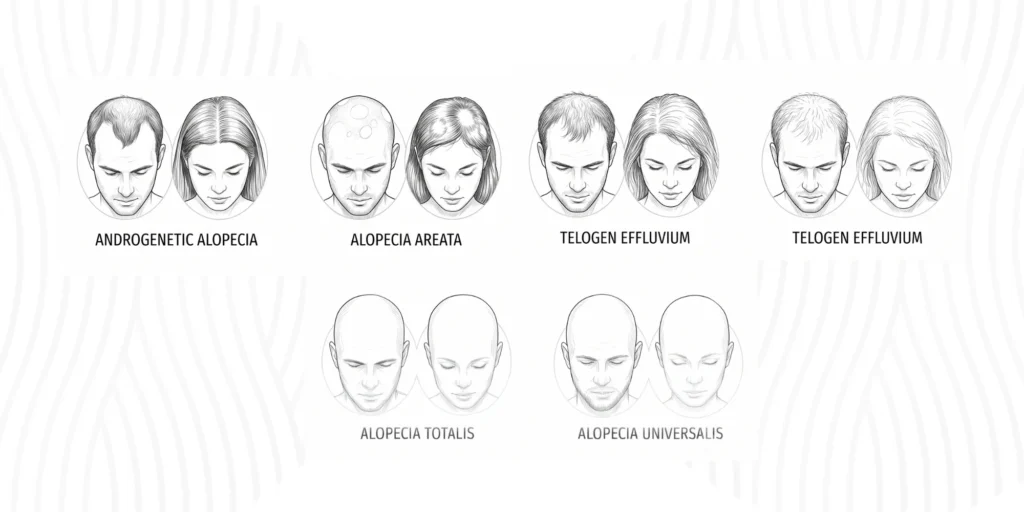
Also known as male or female pattern hair loss, androgenetic alopecia is the most common type of hair loss. It is primarily caused by genetics and the effects of hormones on hair follicles.
In men, it often begins with a receding hairline or thinning at the crown. In women, it typically presents as diffuse thinning along the top of the scalp while preserving the frontal hairline. Without treatment, the condition usually progresses over time.
Alopecia areata is an autoimmune condition in which the immune system mistakenly attacks healthy hair follicles.
It commonly causes smooth, round patches of hair loss that can appear suddenly. While some people experience spontaneous regrowth, others may require medical treatment depending on the severity and recurrence of the condition.
Telogen effluvium is a temporary form of hair loss triggered by significant physical or emotional stress.
Common causes include:
Unlike pattern hair loss, telogen effluvium usually causes diffuse shedding across the scalp rather than distinct bald spots. In many cases, hair growth gradually resumes once the underlying trigger is addressed.
These are more advanced forms of alopecia areata.
Although less common, these conditions often require long-term medical management under the guidance of a dermatologist or hair restoration specialist.
For many Filipinos, hair loss is often associated with aging, illness, or declining attractiveness.
Women may feel pressure to maintain thick, healthy hair because it is closely tied to traditional beauty standards. As a result, many delay seeking medical advice and attempt to conceal thinning hair instead.
Men also experience emotional challenges. Hair loss is frequently viewed as a visible sign of aging, and concerns about appearance may affect self-esteem, social interactions, and even professional confidence.
While these feelings are common, hair loss is a medical condition, not a personal failure. Seeking an evaluation early may improve treatment outcomes and help identify underlying health concerns.
If you notice any of the following, it is advisable to consult a medical professional:
Early diagnosis allows doctors to distinguish between temporary shedding, hereditary hair loss, autoimmune conditions, and other causes before recommending treatment.

The most appropriate treatment depends on the underlying diagnosis.
For hereditary hair loss, doctors may recommend evidence-based medical therapies such as Minoxidil or Finasteride, when appropriate for the patient. Autoimmune forms of alopecia may be managed with corticosteroids or other treatments prescribed by a physician to reduce inflammation and suppress the immune response.
For selected patients experiencing hair thinning, regenerative therapies such as Platelet Mesotherapy and Exosomes (PMT-X) may also be considered as part of a personalized treatment plan to support scalp health and hair growth.
Because every form of alopecia has different causes, self-diagnosis can delay effective treatment. A comprehensive consultation remains the most important first step.

Not all hair loss is the same, and no single treatment works for every patient.
At Clinique de Paris, every hair restoration journey begins with a comprehensive medical assessment to determine the underlying cause of hair loss and recommend a personalized treatment plan. Whether your condition is temporary, hereditary, or autoimmune, an accurate diagnosis helps ensure that treatment is tailored to your specific needs.
If you’ve noticed persistent hair loss or changes in your hair density, book a consultation with Clinique de Paris to receive a professional evaluation and explore the treatment options that may be appropriate for you.
Androgenic alopecia is the most common type of alopecia. Also known as male or female pattern hair loss, it is an inherited condition caused by genetics and hormones. Without treatment, it typically progresses over time.
The only way to accurately identify the type of alopecia is through a medical evaluation. While some forms cause diffuse thinning and others produce patchy hair loss, different conditions can appear similar. A proper diagnosis helps determine the most appropriate treatment plan.
No. Some types of alopecia are temporary, while others are progressive. Telogen effluvium often resolves after the underlying trigger is addressed, whereas androgenic alopecia generally requires long-term management to slow hair loss.
Yes. Significant physical or emotional stress can trigger telogen effluvium, a temporary form of alopecia. Hair shedding usually begins two to three months after the stressful event and often improves once the body recovers.
Treatment depends on the underlying cause of hair loss. Options may include medications such as Minoxidil, Finasteride or Dutasteride topical solutions, corticosteroids for certain autoimmune conditions, or regenerative treatments like Platelet Mesotherapy and Exosomes (PMT-X), depending on your diagnosis.
You should seek medical advice if hair loss persists, worsens, or occurs suddenly. A consultation is recommended if you notice a receding hairline, thinning crown, patchy hair loss, excessive shedding, or have a family history of hereditary hair loss.
Yes. Not all forms of alopecia require surgery or hair transplants. Many patients benefit from non-surgical treatments such as topical medications or regenerative procedures, depending on the type and stage of hair loss. A consultation helps determine the most appropriate treatment approach.