

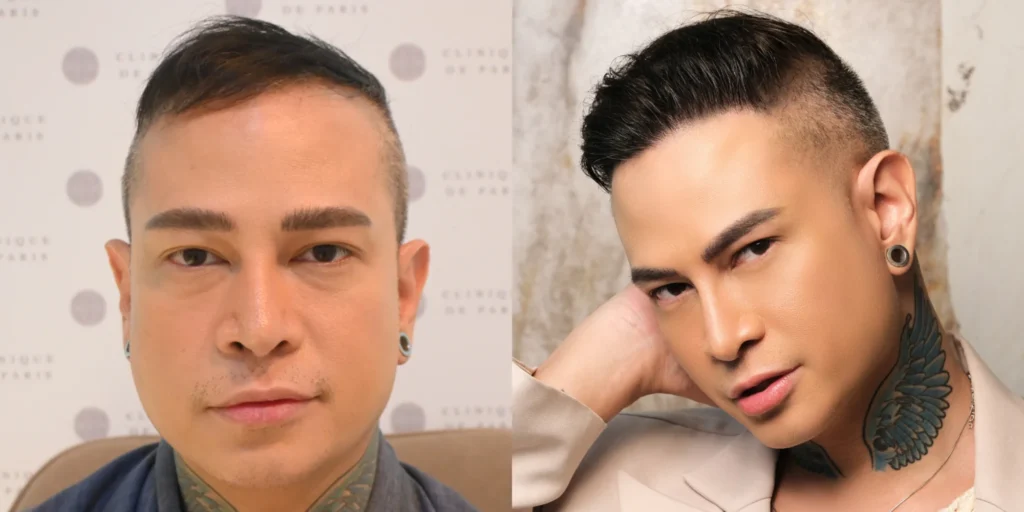
What Is a Robotic Hair Transplant?
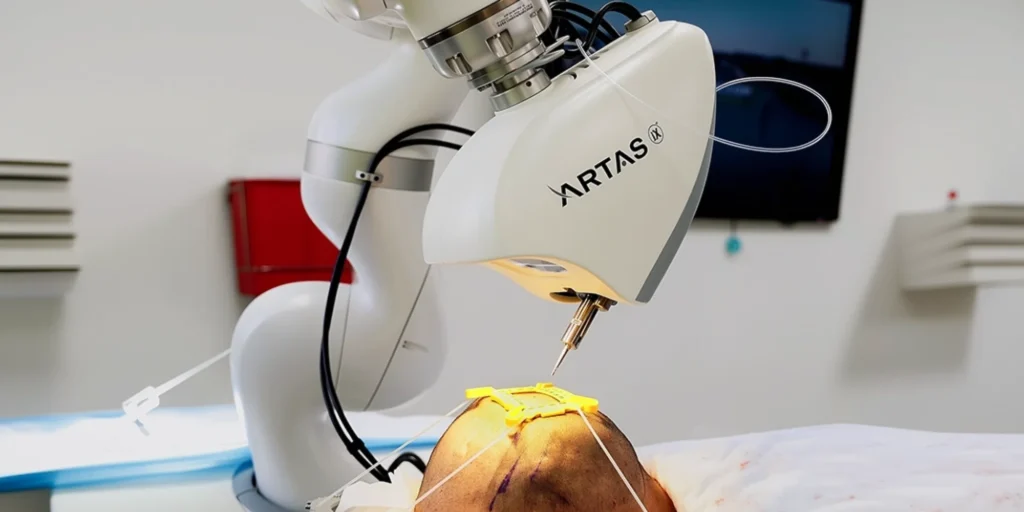
A robotic hair transplant uses computer assisted technology to help with specific parts of follicular unit extraction (FUE), particularly the identification and harvesting of individual hair follicles from the donor area.
Robotic hair transplantation does not mean that a robot performs the entire procedure. A physician remains responsible for diagnosing hair loss, evaluating the donor area, designing the hairline, planning graft distribution and overseeing the procedure.
Robotic systems such as ARTAS were developed to assist physicians during FUE. After follicles are harvested, they must still be prepared and implanted into areas affected by hair loss.
This distinction matters because hair transplantation involves two important stages: harvesting follicles and placing them into the recipient area.
Robotic systems primarily assist with extraction. Techniques such as Direct Hair Implantation (DHI) focus on the implantation stage, where individual follicles are placed into the recipient area according to the patient’s hairline, hair direction, density and facial proportions.
How Does a Robotic Hair Transplant Work?
A robotic hair transplant usually involves several stages:
1. Medical Assessment
The physician evaluates the cause and pattern of hair loss, donor density, scalp condition, existing hair and long term expectations.
2. Donor Area Mapping
Computer assisted imaging is used to identify suitable follicular units in the donor area.
3. Robotic Follicle Extraction
The robotic system assists with the extraction of individual follicular units using a punch based FUE technique.
4. Graft Preparation
The harvested follicles are examined, sorted and prepared for implantation.
5. Hairline and Recipient Planning
The physician determines where the follicles should be placed, considering hairline shape, angle, direction, density and the patient’s facial proportions.
6. Graft Implantation
The follicles are implanted into the recipient area using the selected implantation technique.
The final two stages are particularly important because successful hair restoration is not determined by extraction alone.
The way follicles are positioned can influence the appearance, direction and density of the restored hair.
What Are the Benefits of a Robotic Hair Transplant?
The potential benefits of robotic hair transplantation are mainly related to computer assisted follicle identification and extraction.
Computer Assisted Follicle Selection
Robotic systems can analyze the donor area and assist in identifying suitable follicular units. This can help standardize certain aspects of the extraction process.
FUE Based Extraction
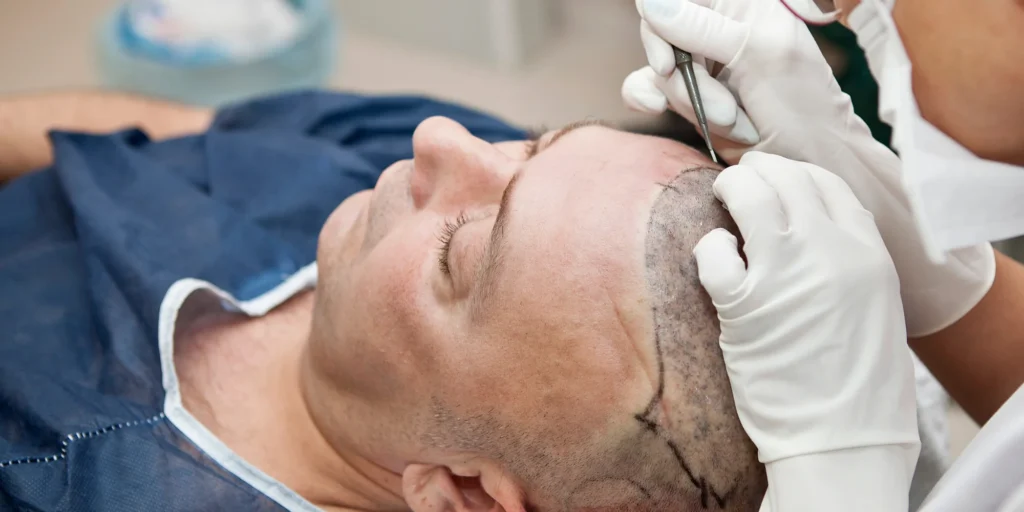
Robotic hair transplantation is generally based on FUE. Instead of removing a strip of scalp, individual follicular units are extracted from the donor area.
FUE does not create the linear scar associated with traditional FUT strip surgery, although small extraction marks can occur.
Technology Assisted Precision
Computer vision and imaging can assist with identifying follicles based on characteristics such as hair direction and follicular structure.
However, these technological capabilities should not be confused with a guarantee of better results.
The final outcome also depends on diagnosis, donor management, graft handling, hairline design and implantation technique.
What Are the Limitations of Robotic Hair Transplantation?
Robotic hair transplantation has limitations, and it is not appropriate for every patient.
Not Every Patient Is a Candidate
Robotic systems have specific operating requirements and patient indications. Hair characteristics, donor density, hair loss pattern and other factors can affect whether a patient is suitable.
A medical consultation is therefore necessary before choosing robotic hair restoration.
Research Is Still Developing
Research comparing robotic and manual FUE has produced varying findings, and existing studies do not establish that robotic transplantation is universally superior.
For example, a small study involving 13 Chinese men compared robotic hair restoration with traditional FUE and reported differences in graft yield and discarded grafts. Patient satisfaction did not differ significantly between the groups.
Because the study was small, its findings should be interpreted cautiously.
A Robot Does Not Replace Clinical Judgment
A robotic system can assist with follicle extraction, but it does not independently determine:
- Whether a patient needs a transplant
- The cause of the patient’s hair loss
- How much donor hair should be harvested
- Where the hairline should be positioned
- How many follicles should be placed in each area
- How the patient’s hair loss may progress
- How individual follicles should be oriented for a natural appearance
These decisions require a qualified medical professional.
Robotic Hair Transplant vs FUE vs DHI
The terms robotic hair transplant, FUE and DHI can be confusing because they describe different aspects of the procedure.
| Feature | Robotic FUE | Manual FUE | DHI |
| Main focus | Computer assisted extraction | Manual follicle extraction | Direct follicle implantation |
| Follicle harvesting | Robotic assistance | Physician performed | Can use an appropriate harvesting technique |
| Hairline design | Physician led | Physician led | Physician led |
| Recipient planning | Physician led | Physician led | Physician led |
| Implantation | Separate implantation step | Separate implantation step | Direct implantation using an implanter |
| Patient assessment | Individualized | Individualized | Individualized |
| Clinical decisions | Physician required | Physician required | Physician required |
What Is the Difference Between FUE and DHI?
FUE primarily describes how follicles are harvested. DHI describes how follicles are implanted.
During FUE, individual follicular units are extracted from the donor area.
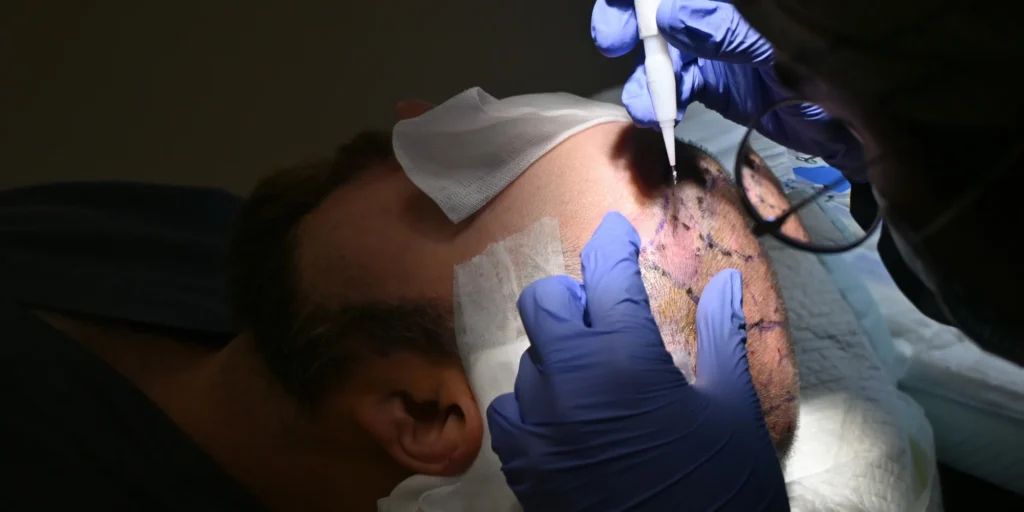
During DHI, individual harvested follicles are placed directly into the recipient area using an implanter. The physician controls the positioning of the follicles according to the treatment plan.
This means FUE and DHI are not always competing procedures.
A hair restoration procedure may involve follicular extraction followed by DHI implantation.
Why Does DHI Focus on Implantation?
Hair restoration is not simply about collecting follicles. Those follicles need to be placed in a way that complements the patient’s existing hair.
With DHI, individual follicles are implanted into the recipient area using an implanter. This allows the physician to plan the placement of each follicle according to factors such as:
- Hairline position
- Hair direction
- Implantation angle
- Density
- Existing hair
- Facial proportions
- The patient’s long term hair loss pattern
The objective is to create a natural transition between transplanted and existing hair.
The implanter itself is a tool. The treatment plan and aesthetic decisions remain physician led.
Why Is Asian Hair Restoration Different?
Asian hair restoration requires individualized planning because hair characteristics can vary considerably between patients and populations.
Factors that may influence treatment planning include:
- Donor hair density
- Hair calibre
- Follicular unit composition
- Hair growth direction
- Scalp characteristics
- Existing recipient hair
- Pattern and progression of hair loss
- Facial proportions
Asian hair can have characteristics that affect how follicles appear against the scalp and how density is planned. This is why donor assessment and individualized hairline design are important.
For patients considering DHI hair restoration, these considerations also extend to the implantation stage.
The goal is not simply to transplant the largest possible number of follicles. A responsible approach considers donor preservation, natural hair direction, appropriate density and future hair loss.

Can You Prevent Hair Loss Before Getting a Hair Transplant?
If you are searching for how to prevent hair loss, the first step is identifying why the hair is thinning or shedding.
There is no single treatment that can prevent every type of hair loss.
Hereditary hair loss is different from temporary shedding caused by illness, nutritional deficiencies, hormonal changes, physical stress or excessive tension on the hair.
Common hair loss prevention measures may include:
- Seeking medical assessment for persistent thinning or excessive shedding
- Identifying and treating underlying causes
- Discussing evidence based treatments for hereditary hair loss with a qualified physician
- Avoiding hairstyles that repeatedly place strong tension on the hair
- Limiting unnecessary chemical and heat damage
- Correcting medically identified nutritional deficiencies
For hereditary hair loss, early assessment may help identify treatment options that can preserve existing hair.
A hair transplant, however, does not prevent future hair loss. Transplanted follicles may provide lasting growth, but non transplanted hair can continue to thin depending on the underlying cause.
Is a Robotic Hair Transplant the Future of Hair Restoration?
Robotic technology is likely to remain part of the development of hair restoration as imaging, follicle identification and surgical assistance continue to advance.
However, the future of hair restoration is unlikely to depend on extraction technology alone.
Modern hair restoration involves several interconnected factors:
- Accurate diagnosis
- Appropriate patient selection
- Donor assessment
- Hairline design
- Graft preservation
- Implantation planning
- Long term management of hair loss
Robotic systems may assist with certain parts of follicle extraction.
DHI represents another area of innovation by focusing on the controlled implantation of individual follicles into the recipient area.
For patients, the relevant question is therefore not simply whether a procedure uses the newest technology.
The more important question is whether the technique, medical team and treatment plan are appropriate for the individual’s hair loss and long term goals.
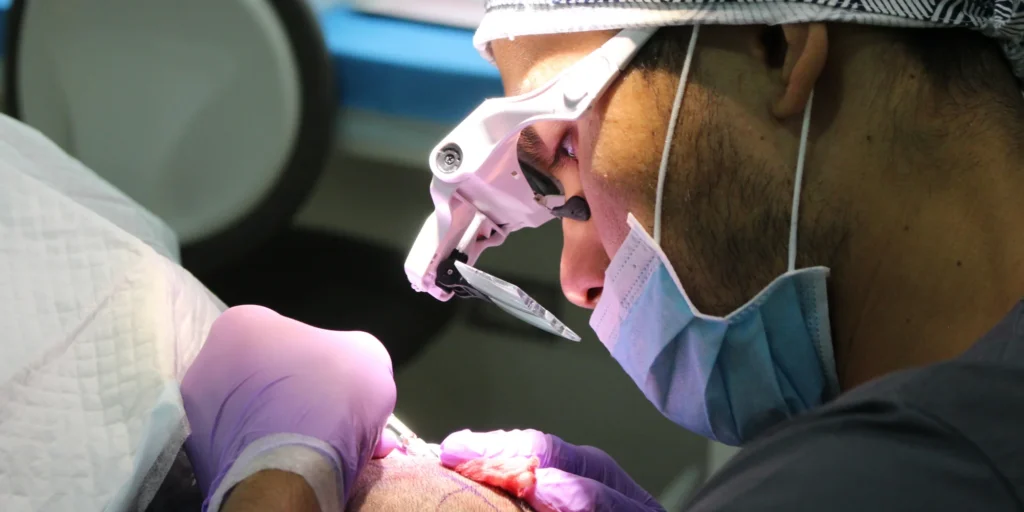
Frequently Asked Questions About Robotic Hair Transplants
Is a robotic hair transplant completely performed by a robot?
No. Robotic systems assist with specific parts of follicle extraction. A physician remains responsible for medical assessment, treatment planning, hairline design and clinical decision making.
Is robotic hair transplantation better than FUE?
Robotic transplantation is generally an FUE based approach in which technology assists with certain extraction steps. Current evidence does not establish that robotic hair transplantation is universally superior to manual FUE.
Is robotic hair restoration suitable for Asian patients?
It can be suitable for some patients, but suitability depends on individual hair characteristics, donor density, hair loss pattern and the specific robotic system being considered.
Is DHI different from FUE?
Yes. FUE primarily refers to follicle extraction, while DHI refers to a direct implantation approach. A DHI procedure can therefore use follicular extraction followed by direct implantation.
Does DHI use a robotic system?
DHI is a physician led implantation technique and does not require a robotic extraction system. The follicles can be harvested using an appropriate extraction method before being individually implanted into the recipient area.
Can a hair transplant prevent future hair loss?
No. A hair transplant restores hair to areas affected by hair loss but does not stop progressive hair loss in non transplanted follicles.
What is the best way to prevent hair loss?
There is no universal solution. The appropriate approach depends on the cause of hair loss. Early medical assessment can help identify whether treatment, monitoring or other intervention is appropriate.
Choosing the Right Hair Restoration Approach
A robotic hair transplant can assist with follicle extraction, but extraction is only one part of hair restoration. The final result also depends on how those follicles are planned, placed and integrated with existing hair.
For Asian hair restoration, DHI places particular emphasis on direct, physician led implantation, with careful attention to each follicle’s angle, direction and distribution.
At Clinique de Paris, our approach combines DHI methodology with international training and a physician led treatment philosophy, bringing together European precision and a distinctly Filipino approach to patient care.
The right treatment ultimately depends on your hair loss pattern, donor supply, existing hair and long term goals. A medical consultation can help determine the most appropriate approach for your individual needs.
Ready for change? Book your consultation now at +63 917 676 5090 or visit cliniquedeparis.com.
Next: Everything You Need to Know About Hair Transplants: A Beginner’s Guide to DHI